MED0001204761 This website contains imagery suitable for audiences 18+. All surgery contains risks read more here
MED0001204761 This website contains imagery suitable for audiences 18+. All surgery contains risks read more here

BODY PROCEDURES
Body contouring after major weight loss in Melbourne with specialist plastic surgeon Dr Sophie Ricketts. Abdomen, breast, back and arms.
ON THIS PAGE
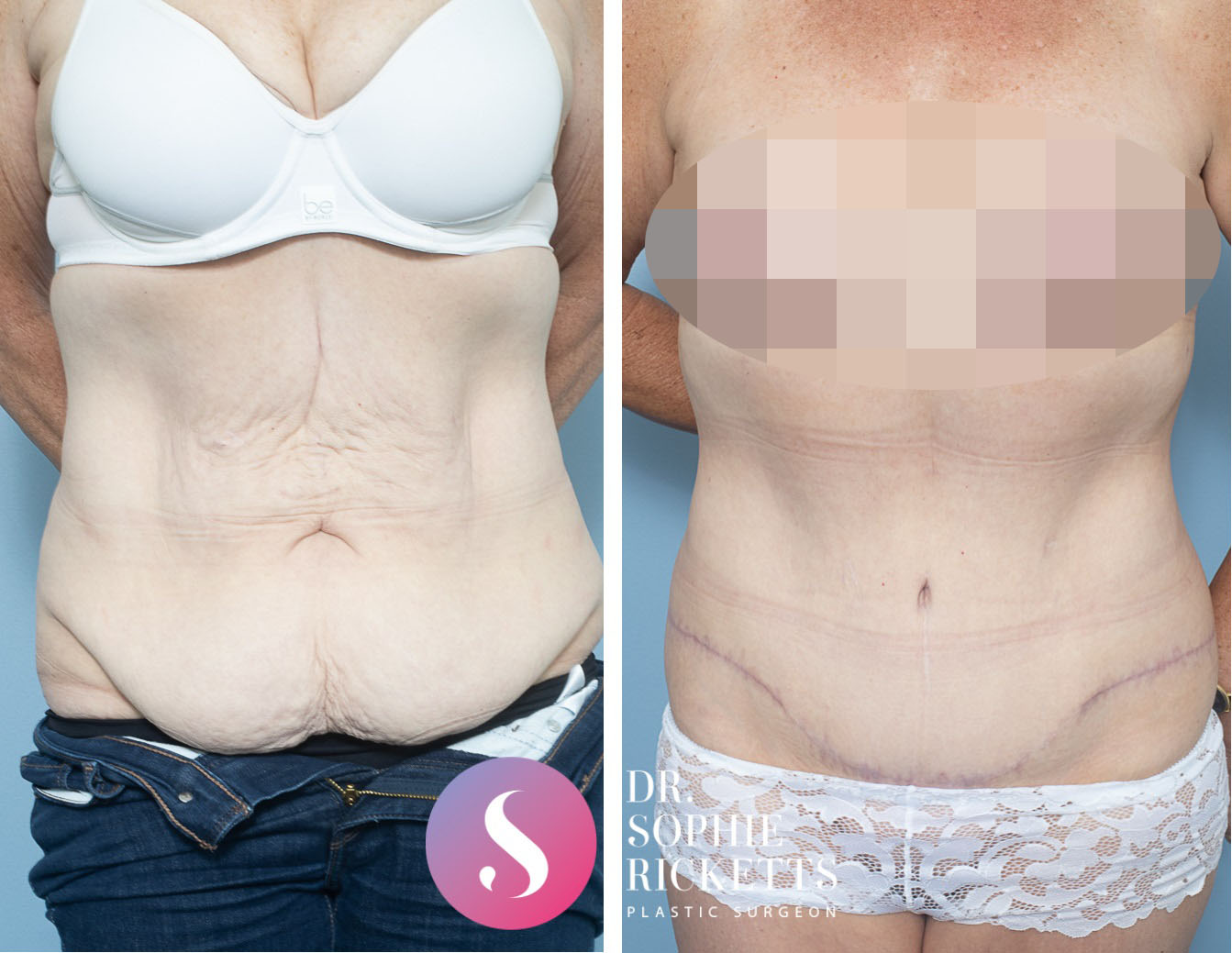
Abdominoplasty
Abdominoplasty, total skin excised 1.4kg | 6 weeks | Age 52
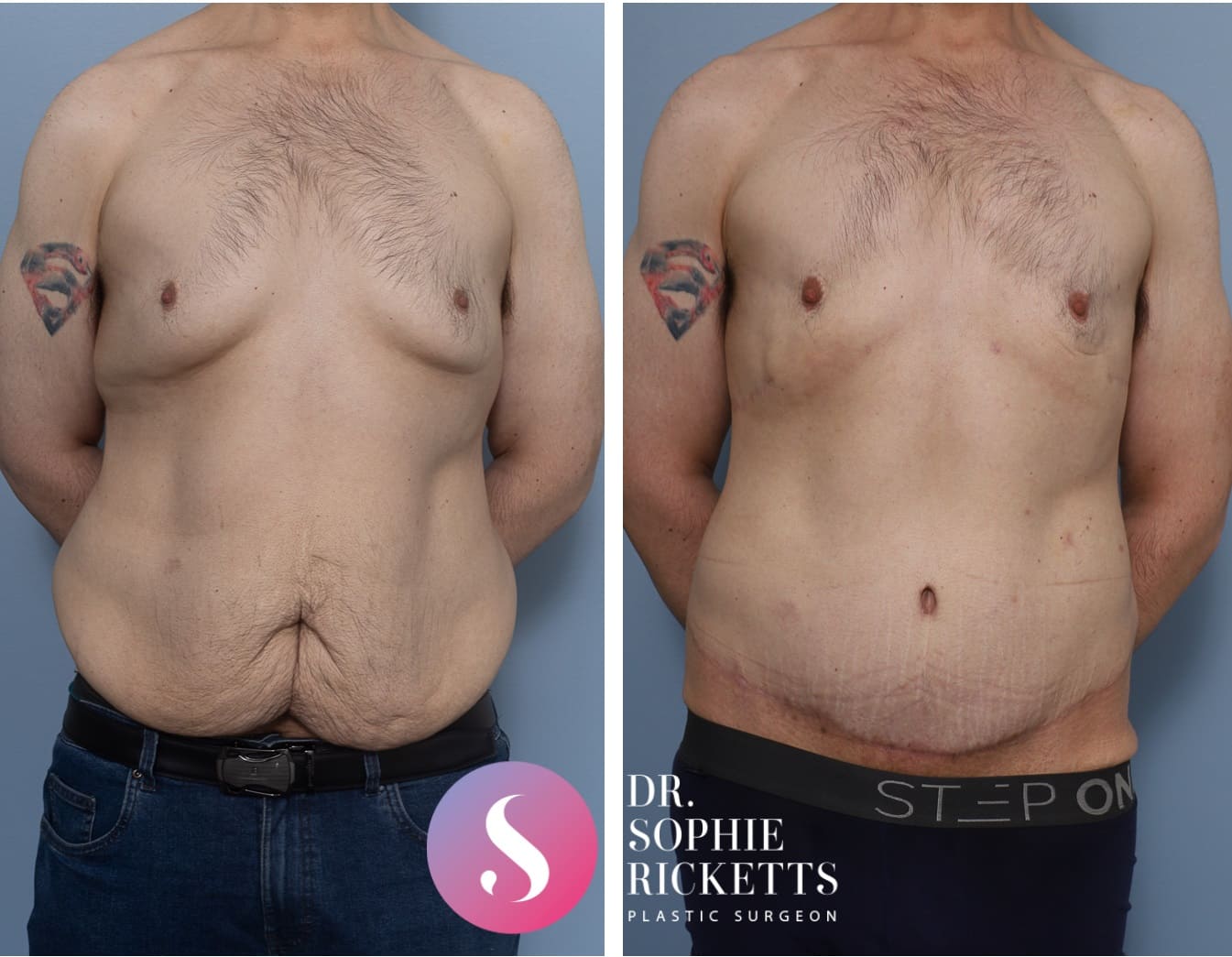
Post Weight Loss
Back lift. Body lift. Abdominal excision 1.6kg. Gynaecomastia correction with chest liposuction 750ml. | 6 months | Age 46
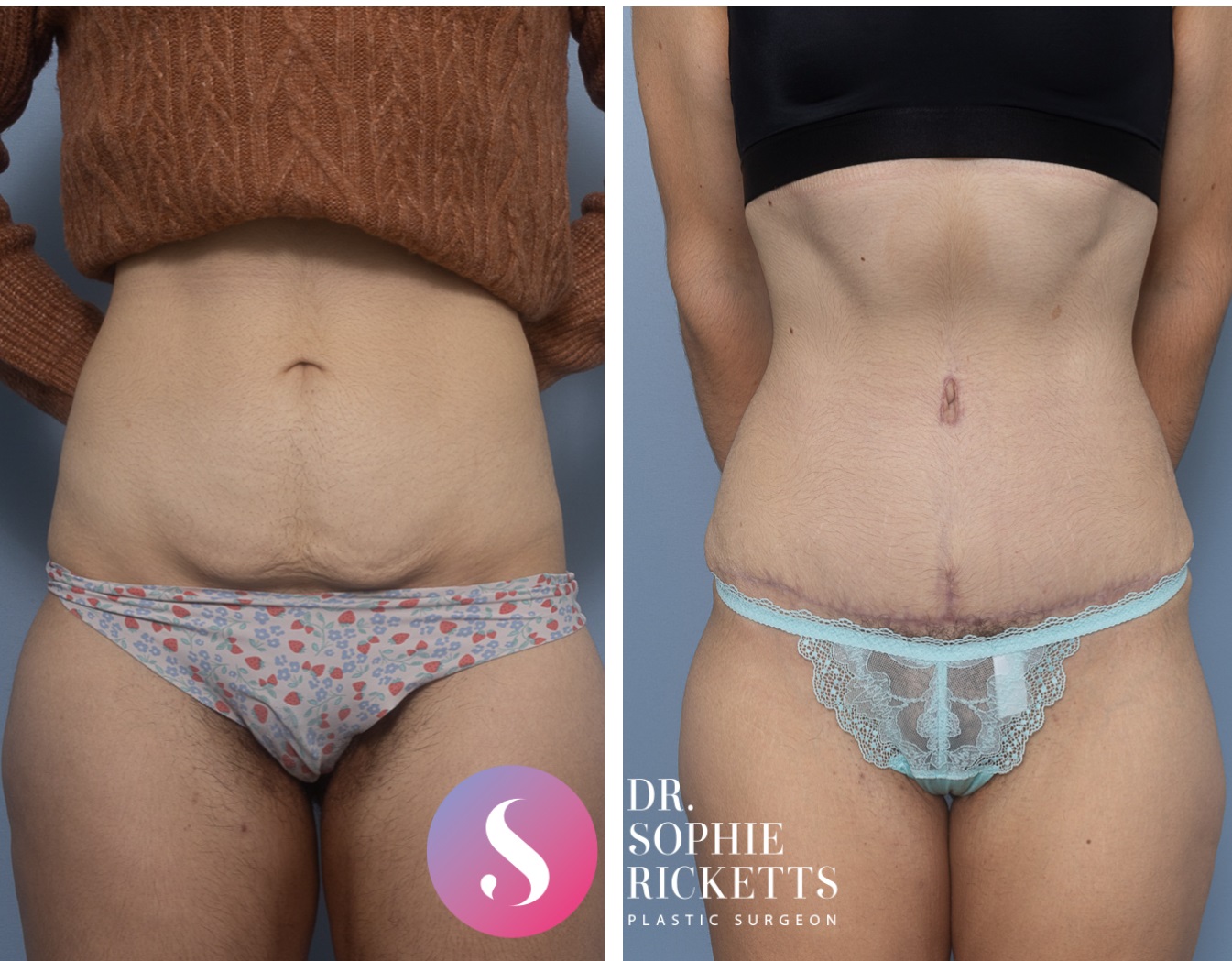
Abdominoplasty
Abdominoplasty - skin excision (no amount listed) | 5 months | Age 21
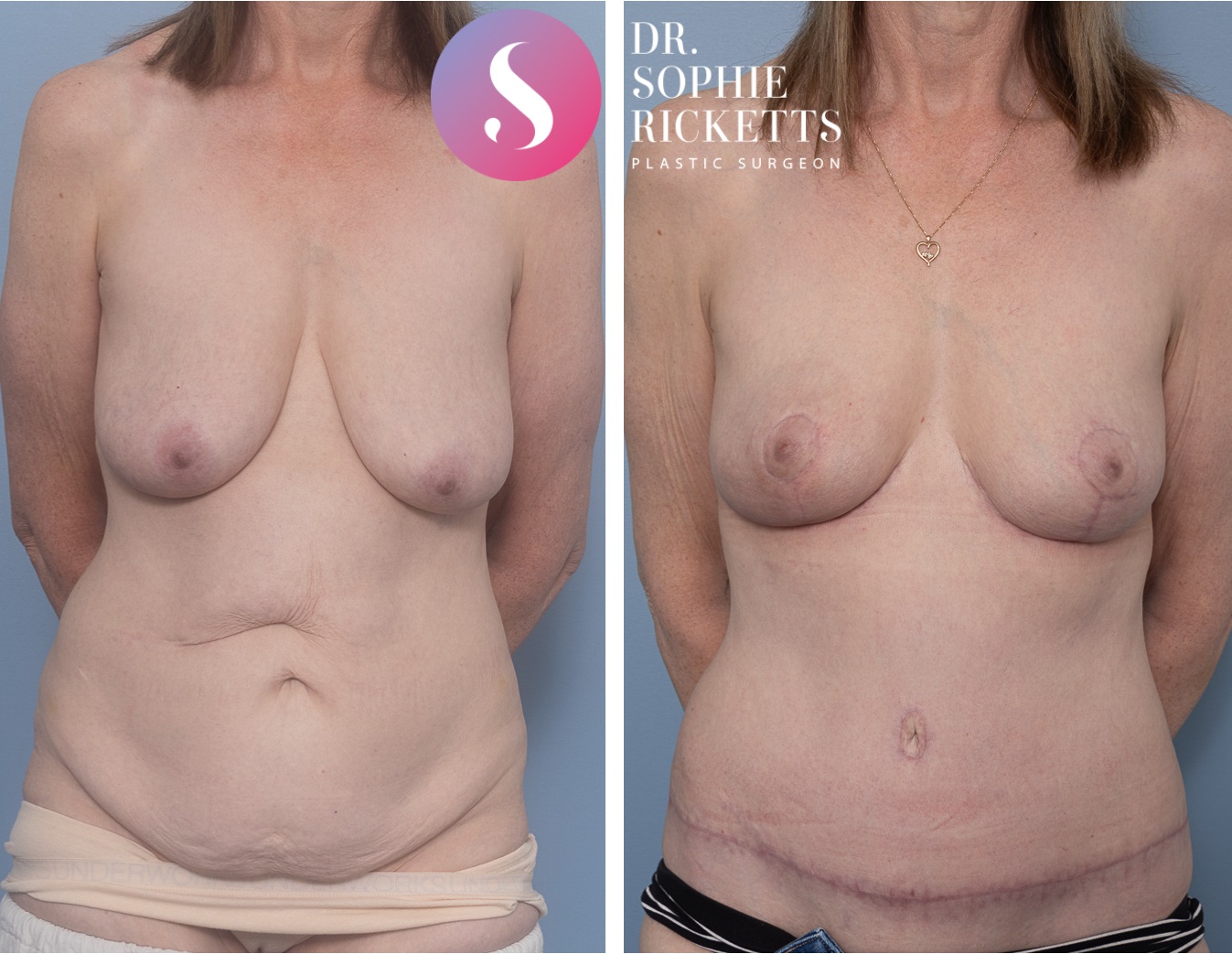
Abdominoplasty
Abdominoplasty, 840g skin excision. Mastopexy, wise pattern, superomedial pedicle, inferior autoaugmentation | 3 months | Age 53
Patients have provided written consent. Images are unaltered. Every patient is an individual; outcomes are not indicative of results for others.
After major weight loss, whether through diet and exercise or weight loss surgery, many people are left with loose, excess skin that does not retract. This can affect several areas of the body at once, including the abdomen, the breasts or chest, the back and the arms. Post weight loss surgery, also called body contouring after weight loss, removes the excess skin and reshapes these areas. Because more than one area is usually involved, it is generally planned as a series of procedures staged over time rather than a single operation.
At your initial appointment with our plastic surgeon, Dr Ricketts examines the areas that concern you, assesses your skin and your overall health, and asks about your weight history and whether your weight is stable. She then helps you plan which procedures to have and in what order. Please also read our abdominoplasty and breast pages, as the details of each procedure is covered there. The main procedures used after weight loss are described below.
Abdominoplasty removes loose skin and fat from the abdomen and repairs separated muscles. After major weight loss the looseness is often significant, so a full or extended abdominoplasty is commonly needed rather than a short scar procedure.
When the looseness extends around the sides to the hips, flanks, outer thighs and buttocks, an extended abdominoplasty or a body lift addresses these areas in a continuous procedure. These are larger operations with longer scars and a longer recovery, and they are common after major weight loss because the looseness rarely stops at the front of the abdomen.
Weight loss often changes the breasts, leaving them flatter or lower. The breast procedures most commonly used after weight loss are breast reduction, breast lift, and breast lift with implants, chosen according to your remaining volume and the shape.
A bra-line back lift, also known as an upper body lift, removes loose skin and folds across the upper and mid back, with the scar positioned so it can sit along the line of a bra in women. It addresses an area that other procedures do not reach and that many people find difficult to manage after weight loss.
Brachioplasty addresses loose skin of the upper arms. An extended brachioplasty continues through the arm-pit onto the side of the chest when there is often also some laxity in the skin. The scar runs along the inner or back of the upper arm, and it is a trade off for removing a significant amount of loose skin, which Dr Ricketts will discuss with you so you understand what it involves.
Post weight loss surgery may suit you if you have loose, excess skin after major weight loss that affects your comfort or daily life, if your weight has been stable for a period of about six months, and if you are in reasonable general health. A stable weight and good nutrition are important, because they affect healing, and people who have lost a large amount of weight can have thinner skin and nutritional factors that make healing less predictable. Smoking increases the risk of healing problems and it will be necessary to cease smoking before and after your surgery. Dr Ricketts will give you an honest assessment of what is achievable and help you plan a safe sequence of procedures.
At your consultation Dr Ricketts examines the areas that concern you, assesses your skin and general health, and asks about your weight history and whether your weight is stable. She then helps you plan which procedures would help and in what order, and explains the scars, recovery and risks for each, giving you written information and time to decide. Because body contouring after weight loss is usually staged, we plan the overall approach together, while being clear that it may be adjusted after your recover from each stage.
Post weight loss procedures are performed under general anaesthetic. Larger procedures involve two to three days hospital stay, while smaller ones may be a day case. On the day Dr Ricketts confirms the plan and marks the areas before surgery, and our team supports you through your admission and recovery, including measures to reduce the risk of blood clots. You will go home with garments, sometimes drains, clear instructions and you may need help arranged at home.
Post weight loss surgery carries the general risks of surgery and anaesthesia, together with the specific risks of each procedure performed. General risks include:
People who have lost a large amount of weight can have thinner skin and nutritional factors that affect healing, so wound healing problems and scar issues are more common in this group. Loose skin may remain or recur, and a degree of revision is often part of the plan. Results vary between individuals, and Dr Ricketts will discuss the risks relevant to each procedure and to your situation, and you should also read the individual procedure pages.
Recovery depends on which procedures you have and how they are combined. Larger procedures involve a few days in hospital, compression garments and sometimes drains, with discomfort, swelling and bruising for the first one to two weeks, and you will need help at home in the early period.
Many people return to desk work at around three to four weeks for abdominal or back lift surgery, with longer for physical work, and arm surgery may allow a slightly earlier return depending on your job. Gentle exercise such as walking can commence at two to three weeks after surgery. Intensive exercise and lifting are restricted for about six weeks. Body contouring after weight loss is usually staged and you generally need to expect to recover for about 3 months between procedures, and the overall plan can take place over about a year. Scars fade gradually over a year or longer. Dr Ricketts will guide you at each step and see you for reviews. Healing varies between individuals, and the outcomes one person experiences do not necessarily reflect what another will experience.
Dr Sophie Ricketts is a specialist plastic surgeon based in Richmond, Melbourne, with a focused practice in body contouring surgery, including post weight loss surgery. She is a Fellow of the Australian and New Zealand College of Surgeons (FRACS) and a member of the Australian Society of Plastic Surgeons (ASPS) and the Australasian Society of Aesthetic Plastic Surgeons (ASAPS), the peak professional bodies for plastic surgery in Australia. You can also find her on RealSelf. Each of these listings is maintained by independent organisations and provides patients with a straightforward way to check the qualifications, training, and scope of practice of the listed providers before booking a consultation.
Dr Ricketts examines the areas that concern you and which are your priority, assesses your skin and general health, and asks about your weight history and whether your weight is stable. She then helps you plan which procedures would help and in what order, and explains the scars, recovery and risks for each, giving you written information and time to decide.
The order depends on which areas concern you most, what can be safely combined, and your recovery between stages. As a general approach, larger areas such as the abdomen and breasts are often addressed earlier, with other areas following. Dr Ricketts will work out a sequence with you that suits your priorities and your health.
This depends on how many areas you want addressed and what can be safely combined in each operation. Body contouring after major weight loss commonly takes place over several stages and can extend over a year or more. Dr Ricketts will outline an expected plan for you, while being clear that it may be adjusted as you heal.
A degree of revision is common after weight loss surgery, because the skin is often thinner and heals less predictably. Dr Ricketts plans for this and will discuss it with you in advance, so it is part of your expectations rather than a surprise. Because there are often a few stages, revisions can often be incorporated into a subsequent stage.
Yes, it is best for your weight to be stable for a period of about six months before body contouring, because further weight loss or gain can change the result. A stable weight and good nutrition also support healing, which is particularly important after major weight loss. Dr Ricketts will discuss your readiness for surgery at your consultation.