MED0001204761 This website contains imagery suitable for audiences 18+. All surgery contains risks read more here
MED0001204761 This website contains imagery suitable for audiences 18+. All surgery contains risks read more here


FACE PROCEDURES
Mini facelift (short scar face lift) in Melbourne with specialist plastic surgeon Dr Sophie Ricketts. Technique, risks and recovery.
ON THIS PAGE
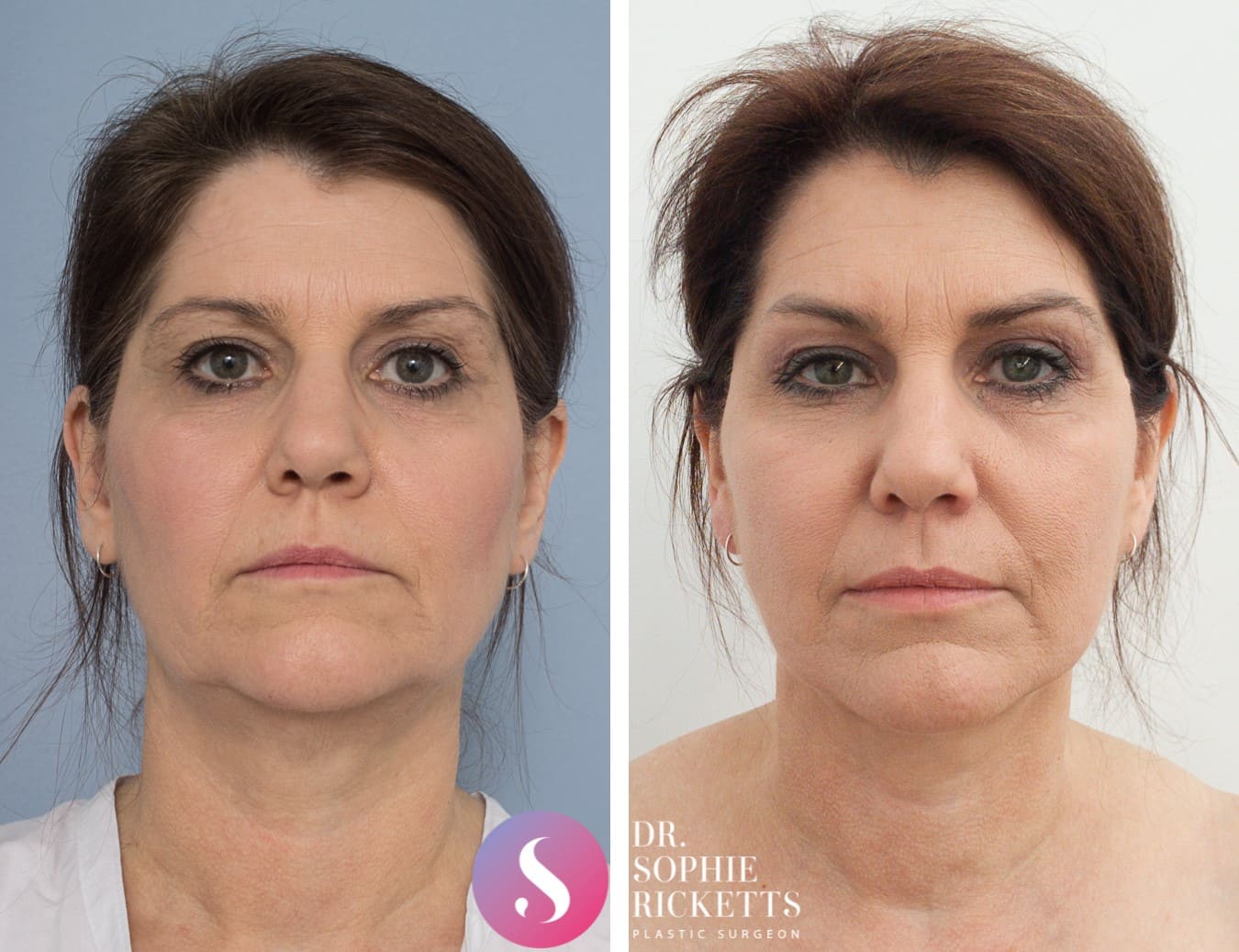
Face and Neck Lift
MACS lower face and neck lift with neck liposuction | 9 weeks | Age 65
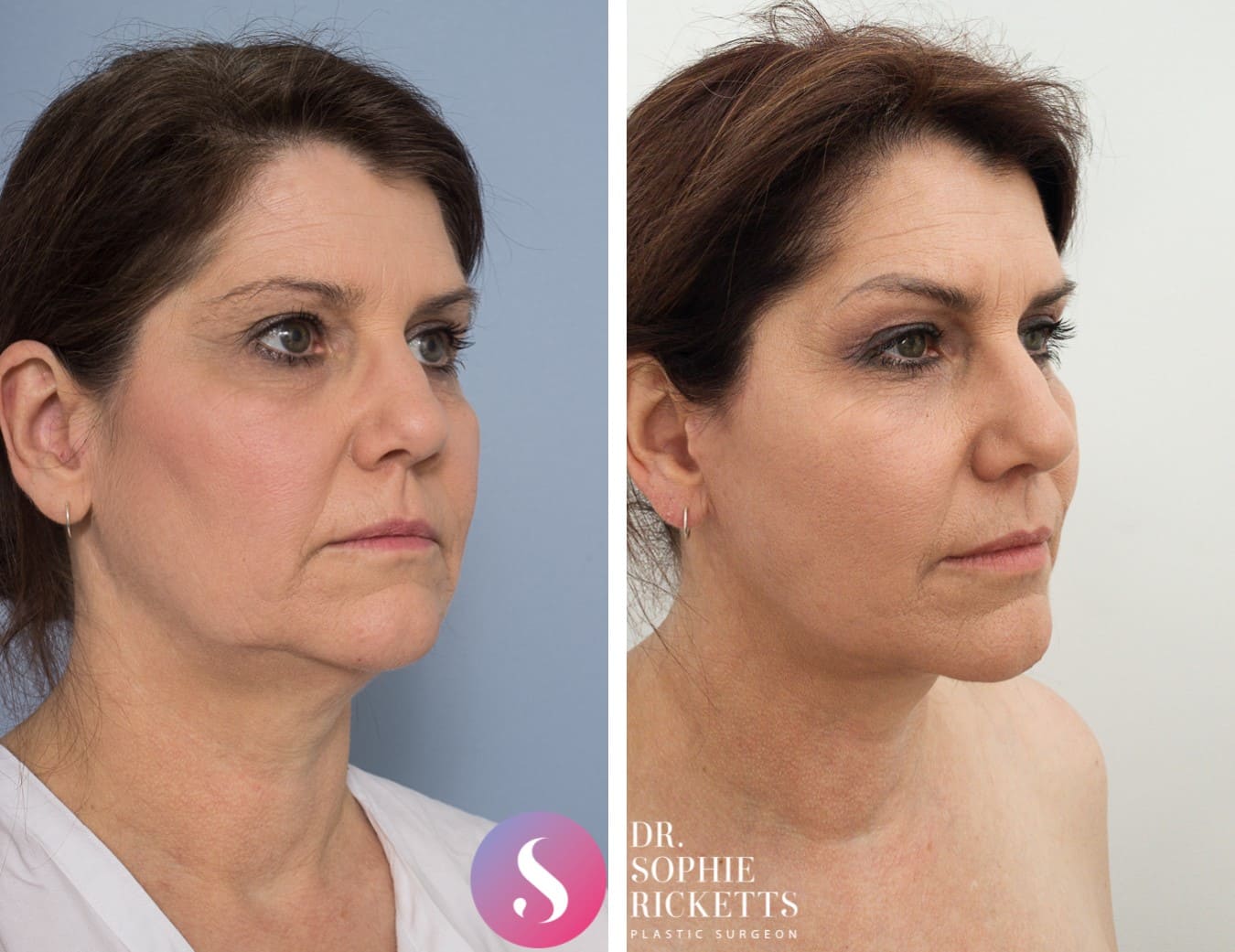
Face and Neck Lift
MACS lower face and neck lift with neck liposuction | 9 weeks | Age 65
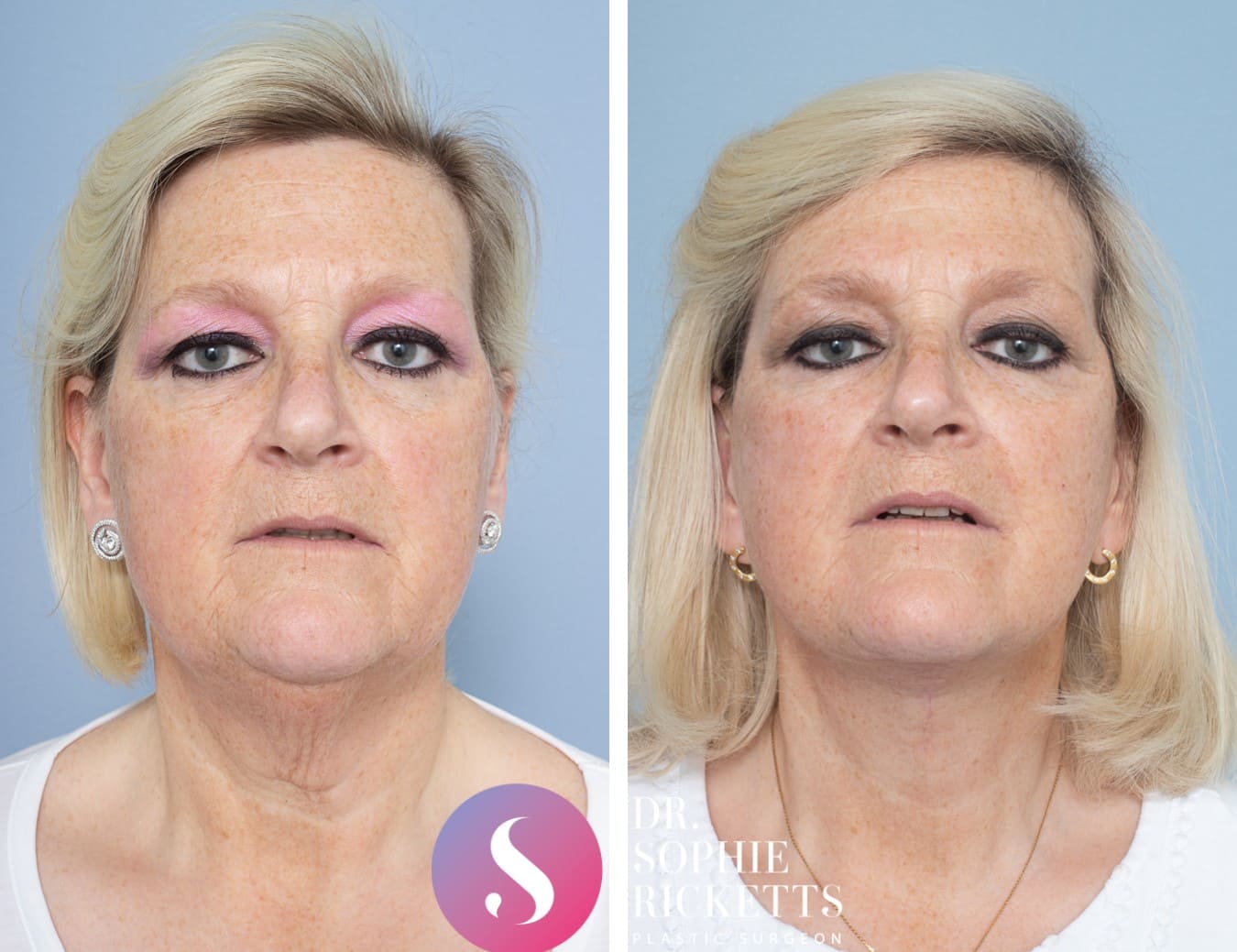
Face and Neck Lift
MACS face and neck lift + neck liposuction | 1 year | Age 57
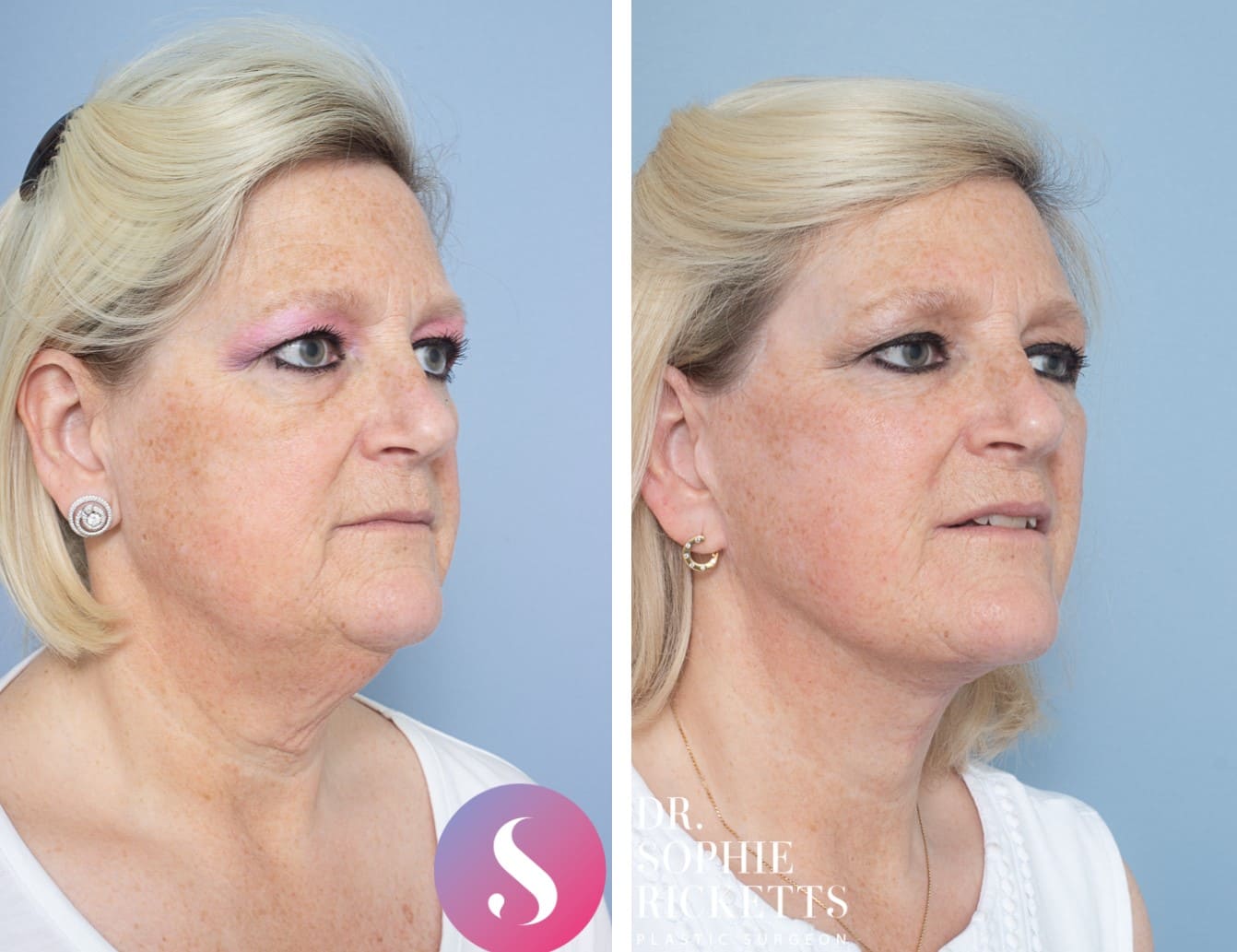
Face and Neck Lift
MACS face and neck lift + neck liposuction | 1 year | Age 57
Patients have provided written consent. Images are unaltered. Every patient is an individual; outcomes are not indicative of results for others.
A mini facelift, or short scar face lift, uses shorter incisions around the ears to address earlier or more limited changes in the lower face and along the jawline. It suits people who are generally at an earlier stage of ageing, with a smaller degree of laxity and early jowling. Because the access is more limited, it is not a substitute for a more complete lift when there is significant change in the face and neck.
At your consultation, Dr Ricketts examines your face and neck and assesses your skin and the deeper supporting tissues. She will tell you honestly what a mini facelift can achieve for you, and whether a fuller SMAS or deep plane lift would give you a better and longer lasting result, because a shorter scar only helps if your changes are early and limited.
The incisions are shorter than those used in a full facelift and sit around the ear. Through this access, Dr Ricketts repositions and supports the deeper tissue of the lower face to a limited degree and removes a small amount of excess skin without tension, which lifts and tightens the jawline and the lower face. Because the operation is more contained, the recovery is generally shorter than a full facelift, though the change is also more modest.
A mini facelift may suit you if you have early jowling or mild laxity of the lower face and jawline, good skin quality, and realistic expectations, and if you are in reasonable general health. It is not the right choice if you have significant descent of the face and neck, where a full facelift is usually needed. It is not a treatment for skin texture, fine lines or pigmentation, which have other causes. Smoking increases the risk of healing problems, so Dr Ricketts will discuss this with you.
At your consultation, Dr Ricketts examines your face and neck, assesses your skin and the deeper tissues, and listens to what concerns you. She explains whether a mini facelift or a fuller lift would suit you, where the scars would sit, the recovery and the risks, and whether procedures such as eyelid surgery or fat transfer would add to your result. She gives you written information and encourages you to take your time, as this is an elective decision.
A mini facelift is performed under general anaesthetic, and is often a day case or an overnight stay. On the day Dr Ricketts confirms the plan and marks the surgical areas with you in the upright position. A dedicated team cares for you through your operation and early recovery. You will go home in dressings with clear instructions, and it is best to have a support person take you home. Your first review is usually about a week later.
Facelift surgery carries the general risks of surgery and anaesthesia as well as risks specific to the face. General risks include:
Risks more specific to a facelift include temporary or, less commonly, longer lasting weakness or altered movement from nerve injury, numbness of the skin, changes to the hairline, changes in earlobe shape, and skin or wound healing problems that are more likely in smokers. Hair loss near the incisions can occur. Because the face heals differently in each person, the result varies and cannot be guaranteed. Dr Ricketts will go through the risks relevant to your chosen technique and your health, and give you written information to consider at home.
In the first one to two weeks, swelling, bruising and tightness are at their most noticeable, and a supportive dressing is usually in place for a short period. Discomfort is manageable with the medications prescribed. Keeping your head elevated and following the activity restrictions in the early days helps you heal.
Because a mini facelift is more limited than a full lift, many people feel ready to return to work and social activity a little sooner, often around two weeks, though bruising does not always clear that quickly. Strenuous exercise is restricted for about three to four weeks. Some numbness of the skin can persist for weeks before improving, and the result continues to refine as swelling settles over about three months. Dr Ricketts will see you for reviews. Everyone heals at a different rate, the timeframes given are a guide only, and the outcomes one person experiences do not necessarily reflect what another will experience.
Dr Sophie Ricketts is a specialist plastic surgeon based in Richmond, Melbourne, with a focused practice in facial surgery, including the mini facelift (short scar face lift). She is a Fellow of the Royal Australasian College of Surgeons (FRACS) and a member of the Australian Society of Plastic Surgeons (ASPS) and the Australasian Society of Aesthetic Plastic Surgeons (ASAPS), the peak professional bodies for plastic surgery in Australia. You can also find her on RealSelf. Each of these listings is maintained by independent organisations and provides patients with a straightforward way to check the qualifications, training, and scope of practice of the listed providers before booking a consultation.
A mini facelift uses shorter scars and addresses early, limited changes in the lower face and jawline, with a lighter recovery. A full facelift uses longer incisions and repositions the deeper tissues more completely, which is needed when there is significant descent of the face and neck. Dr Ricketts will explain which suits your stage of ageing.
A mini facelift focuses on the lower face and jawline and does limited work, so it is not the best option if your main concern is significant loose skin or banding of the neck. In that case a facelift combined with neck surgery is usually needed. Dr Ricketts will assess your neck at your consultation.
A mini facelift repositions and supports the tissues to a limited degree, so the result is more modest and generally does not last as long as a full SMAS or deep plane lift. Your face also continues to age naturally afterwards. How long the result lasts varies between individuals.
Swelling, bruising and tightness are most noticeable in the first one to two weeks. Many people return to work and social activity around two weeks, with strenuous exercise restricted for about three to four weeks, and the result refining over about three months.
Yes. A mini facelift can be combined with eyelid surgery, a brow lift or fat transfer to give a more balanced result, since the upper and lower face age together. Dr Ricketts will discuss whether a combination suits you and how it affects recovery.