MED0001204761 This website contains imagery suitable for audiences 18+. All surgery contains risks read more here
MED0001204761 This website contains imagery suitable for audiences 18+. All surgery contains risks read more here


NOSE PROCEDURES
Ethnic rhinoplasty in Melbourne with specialist plastic surgeon Dr Sophie Ricketts, respecting your features and your background.
ON THIS PAGE
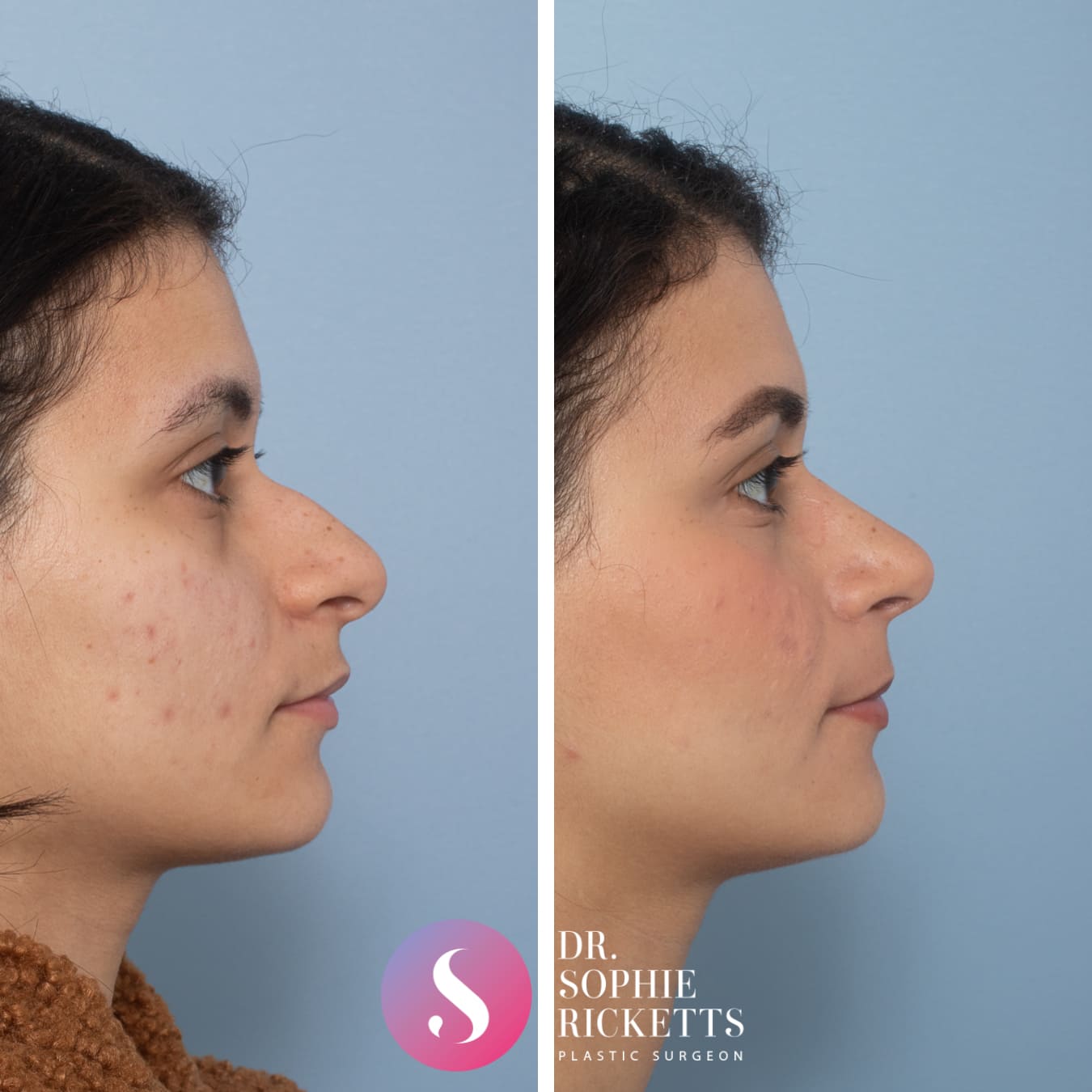
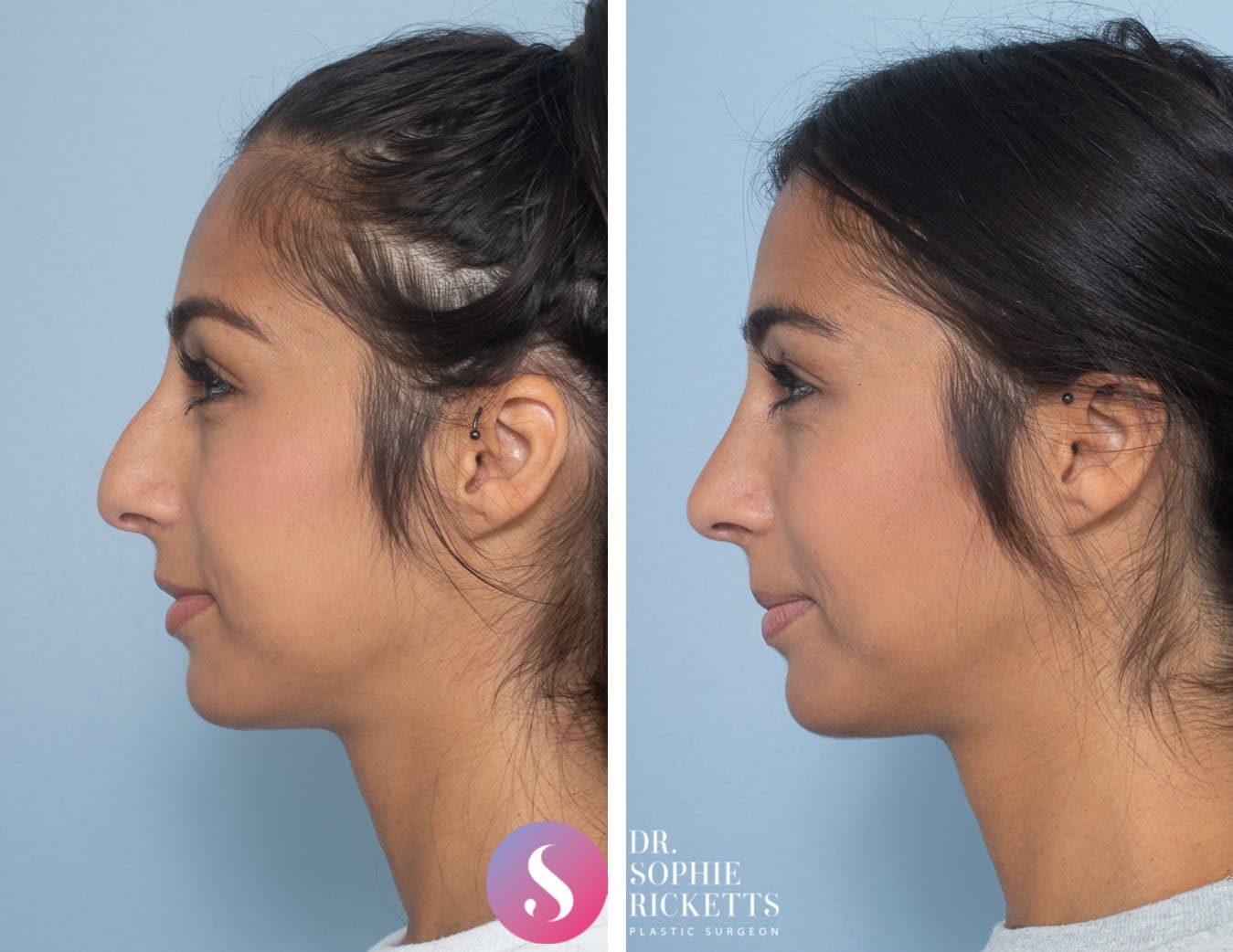
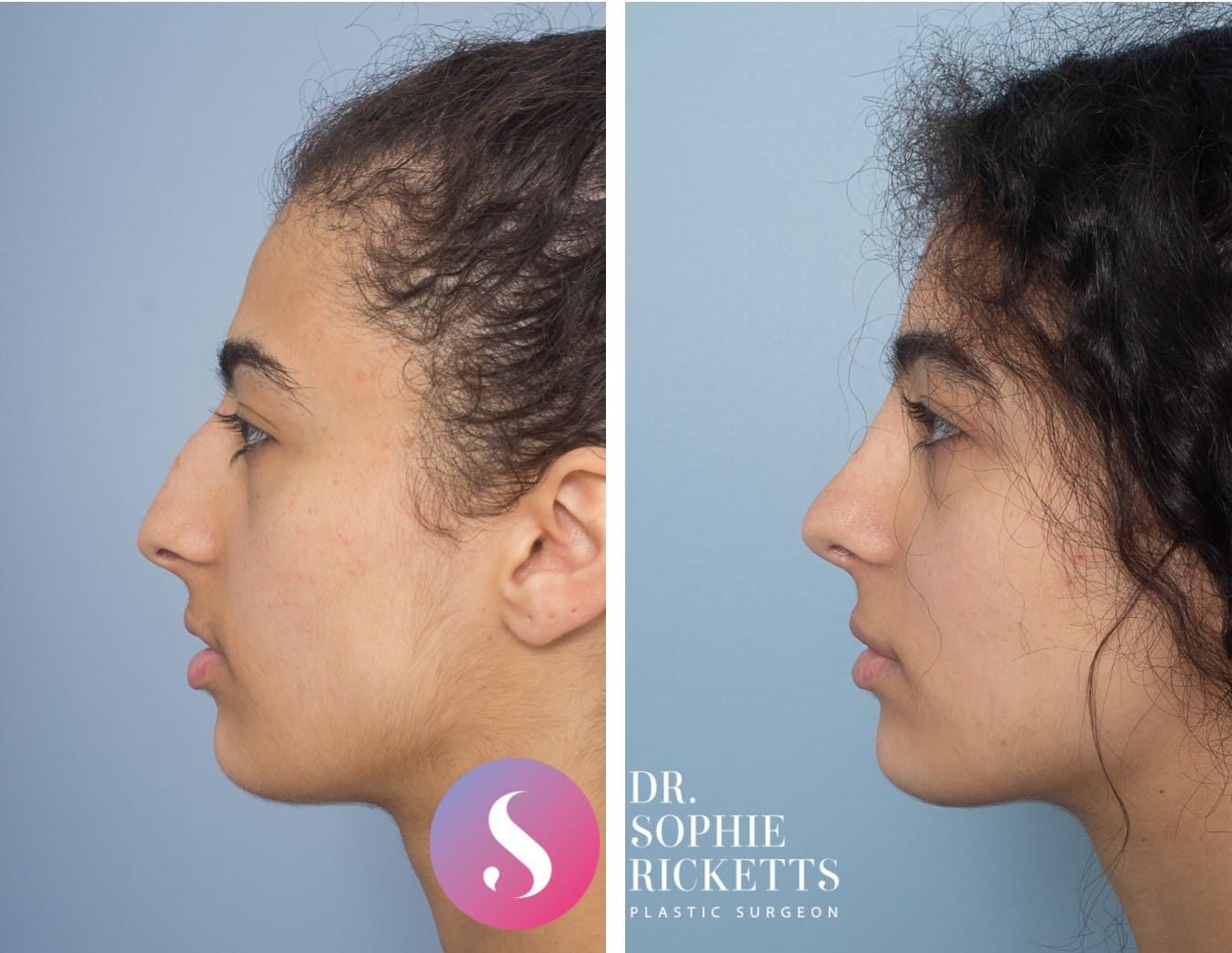
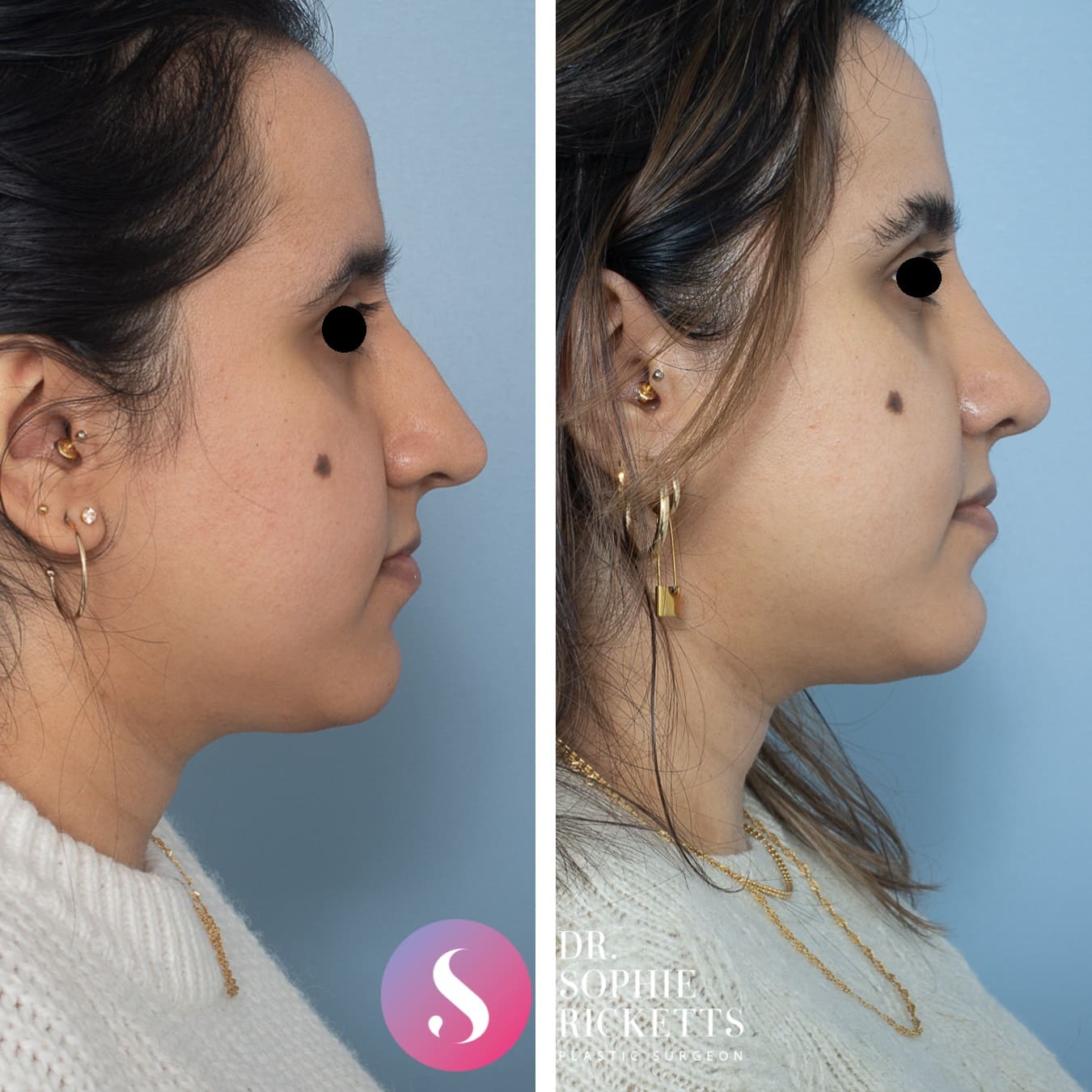
Patients have provided written consent. Images are unaltered. Every patient is an individual; outcomes are not indicative of results for others.
Ethnic rhinoplasty is a general term for nose surgery planned around the features common in patients from a range of backgrounds, including African and Afro-Caribbean, Middle Eastern, Mediterranean, Hispanic and Latino, and Indian and South Asian heritage. Noses from different backgrounds vary widely in skin thickness, cartilage strength, bridge height and nostril shape, so there is no single approach. The aim is always to refine your nose in a way that suits your face and respects your background, rather than applying one standard or changing your ethnic character.
Dr Ricketts assesses your nose and your whole face together and plans each operation around your individual anatomy, your skin and your goals. She takes time to understand what you would like to change and what you would like to keep, and she is honest about what is realistically achievable for your nose.
Because backgrounds differ, the goals differ. Some patients want to reduce a prominent dorsal hump, common in Middle Eastern and Mediterranean noses, while others want to add height and definition to a lower bridge and a rounded tip, common in African and some South East Asian noses. Common themes across ethnic rhinoplasty include:
Patients of specific backgrounds may find our dedicated Asian rhinoplasty and Caucasian rhinoplasty pages helpful as well.
Dr Ricketts performs predominantly open structural rhinoplasty, which gives the visibility and access needed to reshape and support the framework accurately. Where support, height or projection are needed, she prefers to use your own cartilage, taken from the septum, ear or rib, rather than a synthetic implant, because your own tissue integrates with your nose and avoids some of the longer term risks of synthetic implants. Sometimes donor rib cartilage can be used as an alternative to your own which will be discussed with you during the consultation. Where breathing is affected, Dr Ricketts addresses the septum and turbinates at the same time.
Rhinoplasty may suit you if you would like to refine the shape of your nose, if you have difficulty breathing, or both, and if you are in reasonable general health. Where the skin is thick, the nose settles slowly and fine detail can be limited, so realistic expectations and patience with recovery are important. Dr Ricketts will be honest with you about what is achievable for your nose, your skin and the way you heal, and about keeping your result in balance with your features and respecting your cultural background.
At your consultation, Dr Ricketts examines the outside and the inside of your nose, including how you breathe, and she assesses the bone, cartilage, skin thickness and the balance of your whole face. We discuss what you would like to change and what you would like to keep, and she explains the approach she would recommend, the recovery and the risks. She gives you written information and encourages you to take your time, ask questions and consider a second opinion.
Rhinoplasty is performed under general anaesthetic, usually as a day case or an overnight stay. On the day Dr Ricketts confirms the plan with you, and our team supports you through your admission, the operation and your recovery. A splint is applied to the outside of the nose, and you will go home with clear instructions and a support person.
Rhinoplasty carries the general risks of surgery and anaesthesia as well as risks specific to the nose. General risks include:
Risks more specific to rhinoplasty include difficulty breathing through the nose, ongoing or new blockage, asymmetry, irregularity of the framework, collapse or change in shape as the nose heals, altered sensation, and the chance that revision surgery is needed. Where cartilage is taken from the ear or rib, there are also some additional risks related to those surgical sites, and a scar. Thicker skin settles slowly and unpredictably, so the final shape can differ from the early result, and no result can be guaranteed. Dr Ricketts will discuss the risks relevant to your nose and your chosen approach.
A splint is usually worn on the outside of the nose for around a week, and there may be soft internal splints for support. In the first one to two weeks expect bruising and swelling around the eyes, which fades over this period. Your nose will be congested while the lining heals, and sleeping with your head elevated in the first week helps to minimise early swelling.
Many people return to desk work after about two weeks. Strenuous exercise and activities that risk a knock to the nose are restricted for four to six weeks. Thicker skin tends to take longer to settle, so the tip and fine definition can continue to refine for well over a year. Dr Ricketts will see you for reviews. Healing varies between individuals, and the outcomes one person experiences do not necessarily reflect what another will experience.
Dr Sophie Ricketts is a specialist plastic surgeon based in Richmond, Melbourne, with a focused practice in facial surgery, including ethnic rhinoplasty (nose surgery). She is a Fellow of the Royal Australasian College of Surgeons (FRACS) and a member of the Australian Society of Plastic Surgeons (ASPS) and the Australasian Society of Aesthetic Plastic Surgeons (ASAPS), the peak professional bodies for plastic surgery in Australia. You can also find her on RealSelf. Each of these listings is maintained by independent organisations and provides patients with a straightforward way to check the qualifications, training, and scope of practice of the listed providers before booking a consultation.
Ethnic rhinoplasty is a general term covering noses from a wide range of backgrounds, including African and Afro-Caribbean, Middle Eastern, Mediterranean, Hispanic and Latino, and Indian and South Asian heritage. Because these noses vary widely, Dr Ricketts plans each operation individually rather than applying one approach.
No. The aim is to refine your nose in a way that suits your face and respects your background, keeping the character that belongs to your features. Dr Ricketts discusses what you would like to change and what you would like to keep so the result reflects your wishes.
Many ethnic rhinoplasty operations need cartilage grafts to support or build the framework, particularly where the skin is thick or the cartilage is soft. Dr Ricketts prefers to use your own cartilage from the septum, ear or rib rather than a synthetic implant, and she will explain what your nose is likely to need. There may be the option to use donor cartilage which is an off-the-shelf segment of rib cartilage that can be an alternative to using your own. The advantage of this is avoiding an additional surgical site for you on the chest. Dr Ricketts will explain her recommendation for you.
A wide nasal base or nostrils can be refined with an alar base reduction, which places small scars in the natural creases at the base of the nose. Dr Ricketts will assess whether this would help your result and show you what to expect.
Most people feel comfortable in public after about two weeks, once the splint is removed and the bruising settles. Where the skin is thicker, the tip and fine definition can continue to refine for well over a year.