MED0001204761 This website contains imagery suitable for audiences 18+. All surgery contains risks read more here
MED0001204761 This website contains imagery suitable for audiences 18+. All surgery contains risks read more here


FACE PROCEDURES
Deep plane facelift in Melbourne with specialist plastic surgeon Dr Sophie Ricketts. How it works, who it suits, risks and recovery
ON THIS PAGE
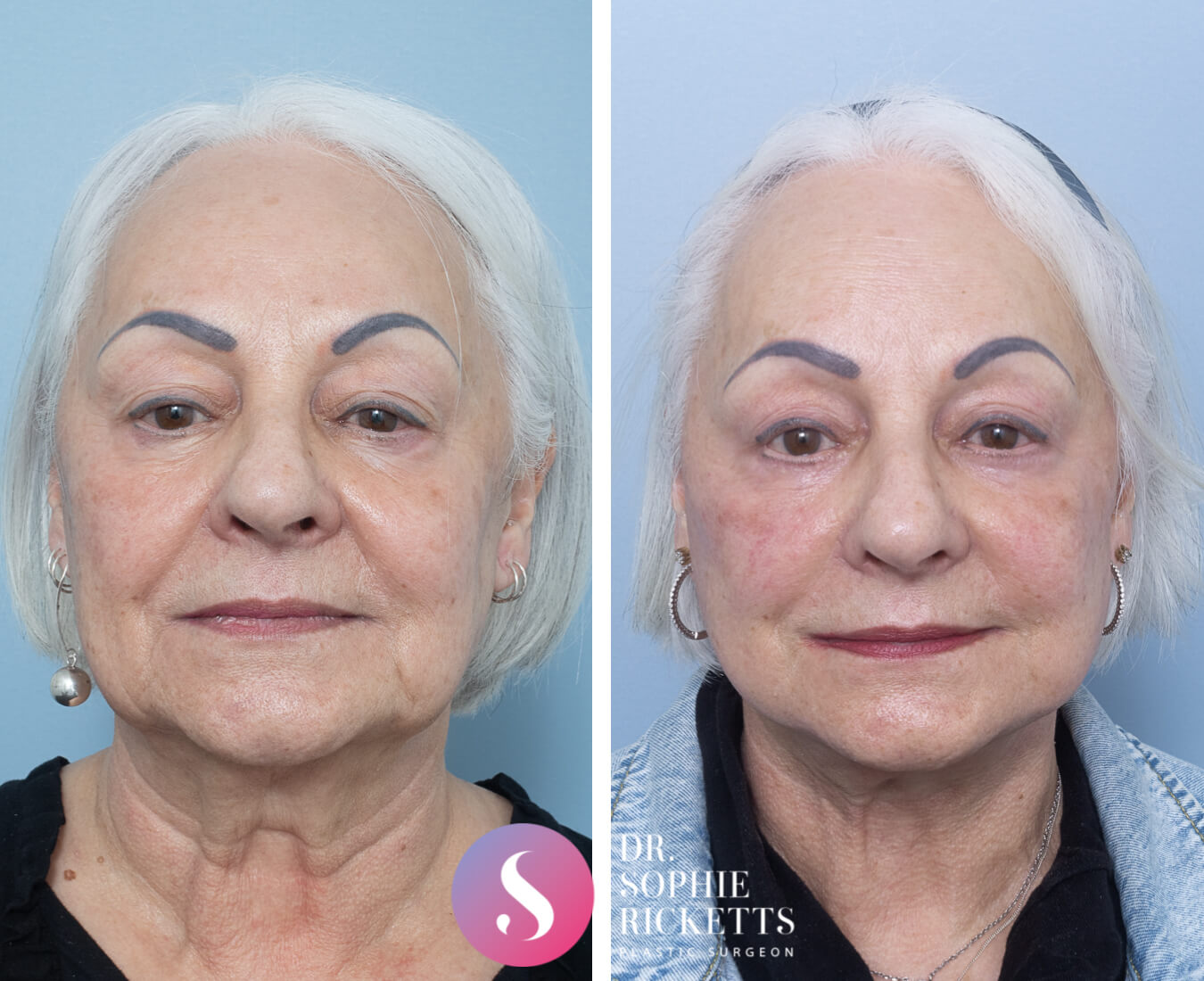
Face and Neck Lift
Deep plane Face lift & Anterior Neck lift with platysma plication and Bilateral Upper and lower pinch blepharoplasty | 6 months | Age 73
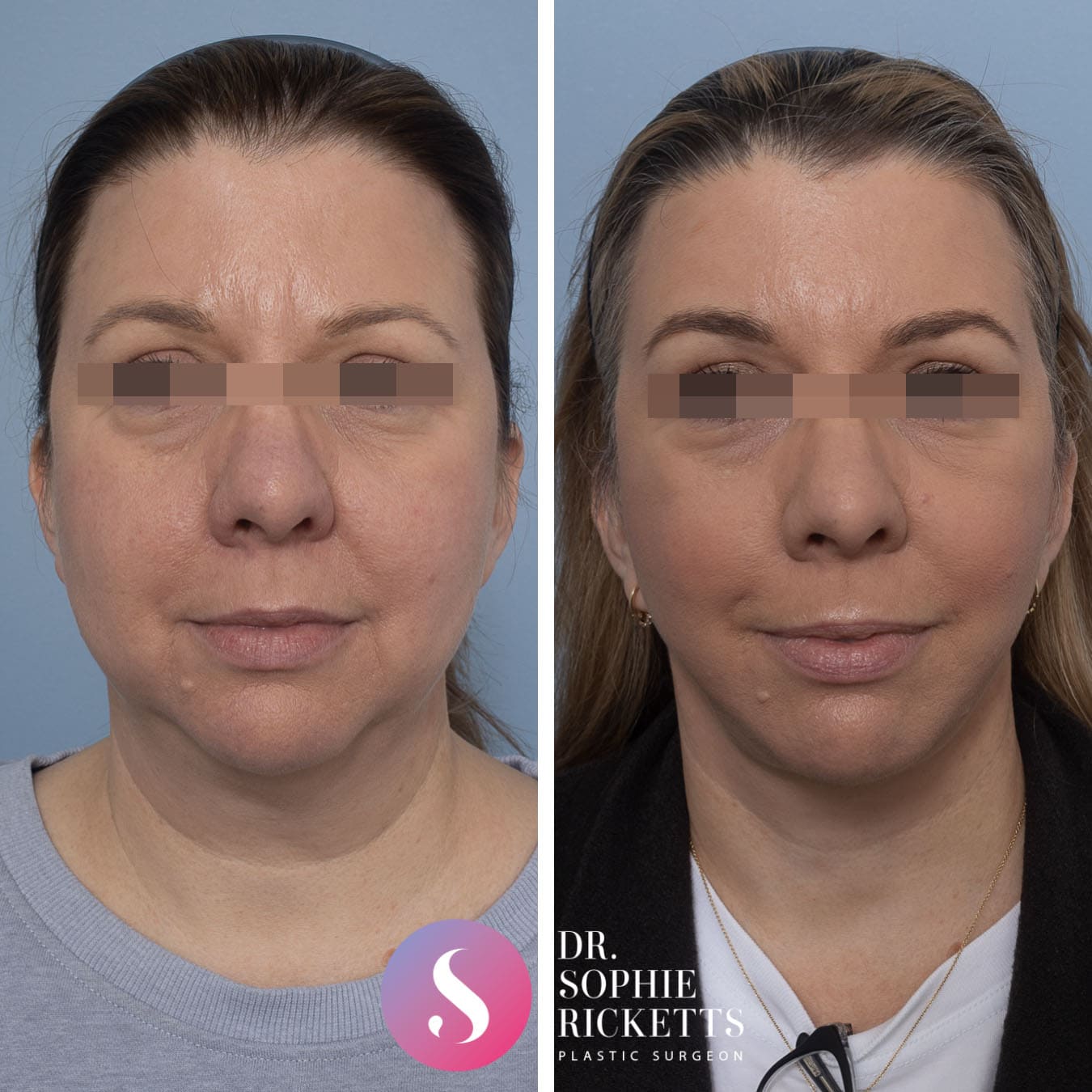
Face Lift
Deep plane face and neck lift, neck liposuction, bilateral temporal brow lift, bilateral upper blepharoplasty | 3 months | Age 44
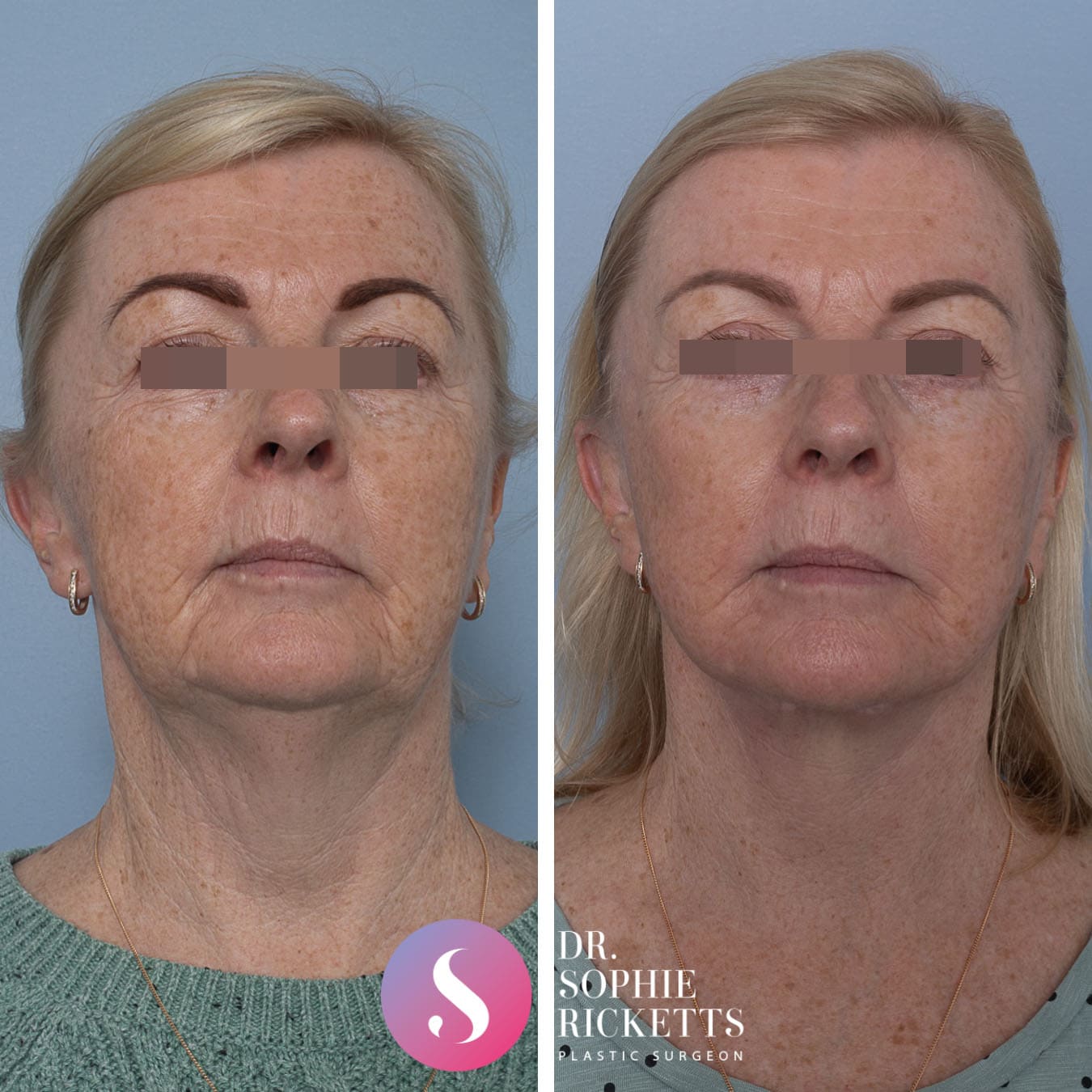
Face Lift
Deep plane face and neck lift, Lateral temporal brow lift, upper and lower pinch blepharoplasty | 12 months | Age 56
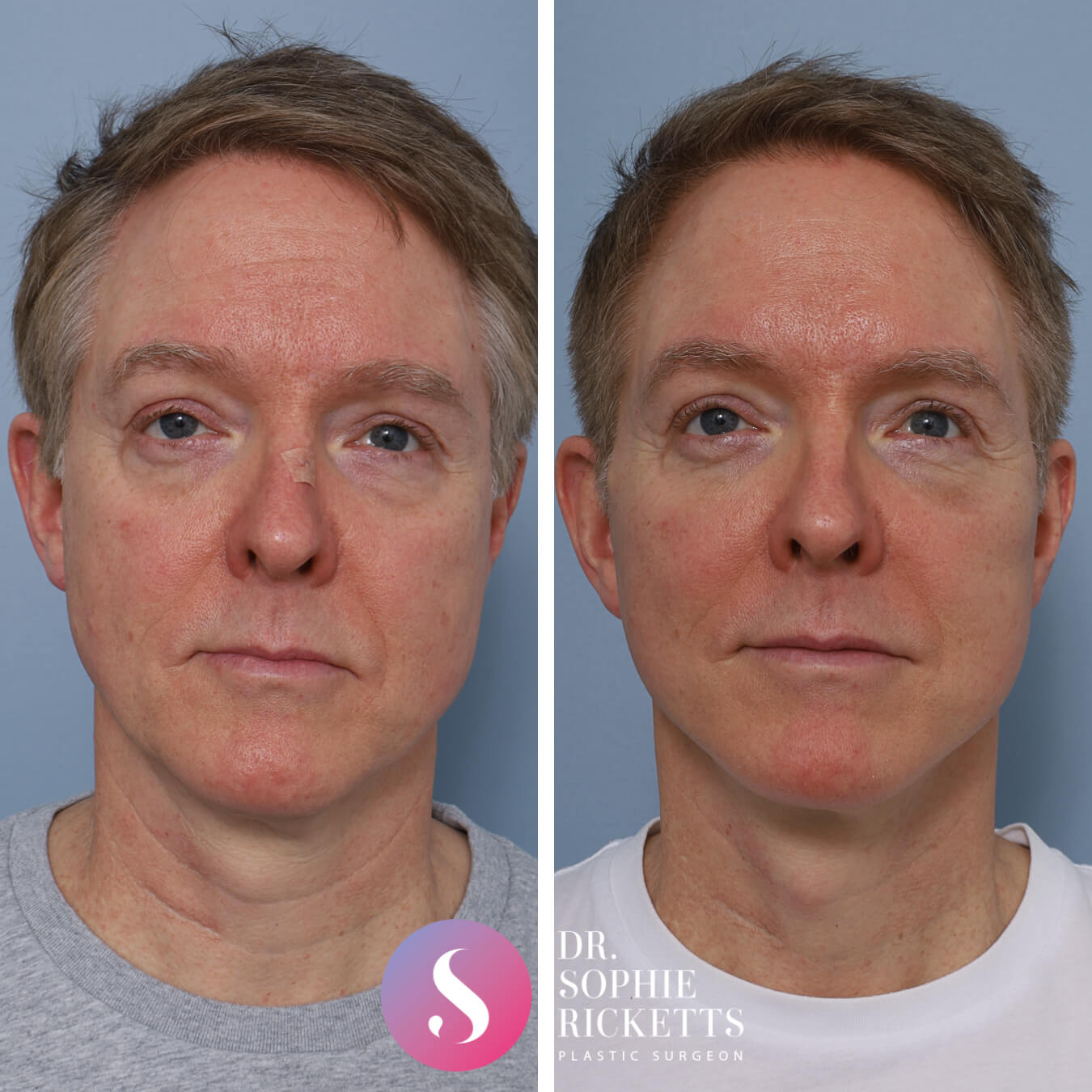
Face and Neck Lift
Deep plane Face & Neck Lift, Facial Fat Transfer to glabella, upper lip, mid face | 6 weeks | Age 53
Patients have provided written consent. Images are unaltered. Every patient is an individual; outcomes are not indicative of results for others.
A deep plane facelift releases and repositions the deeper facial tissues and the skin as a single composite unit, working beneath the SMAS layer. It is a more involved operation than an SMAS facelift, with manipulation of the tissues deep in the face around the facial nerve. It is suited to particular patterns of ageing, especially where there is significant descent and flattening of the mid face and deeper folds. Its benefits are seen in the longevity of the result and the ability to create greater change in the central face, where much of the soft tissue descent of aging occurs.
At your consultation, Dr Ricketts examines your face and neck and assesses the pattern of your ageing. She will explain whether a deep plane approach is appropriate for you and how it compares with an SMAS facelift, along with its relative benefits and the more involved recovery, so you can make an informed decision.
In a deep plane facelift, the deeper tissues are released from their ligamentous attachments and lifted together with the overlying skin as one unit, rather than lifting the SMAS and the skin separately. This allows the mid face and the cheek to be repositioned more powerfully, which softens deep folds and restores support to the central face. Because the work is carried out in a deeper layer close to the branches of the facial nerve, it requires particular experience, and Dr Ricketts will discuss why it may or may not be the right technique for your face.
A deep plane facelift may suit you if you have significant descent and flattening of the mid face, deep folds and jowling, and if you are in reasonable general health. It is not a treatment for skin texture, fine lines or pigmentation, which have other causes, and it does not stop the aging process. Smoking significantly increases the risk of healing problems, so stopping well before surgery is necessary. Dr Ricketts will be honest about whether the pattern of your ageing suits this technique.
At your consultation, Dr Ricketts examines your face and neck, assesses your skin, the deeper tissues and your bone structure, and listens to what concerns you. She explains whether a deep plane or an SMAS approach would suit you and why, where the scars would sit, the recovery and the risks, and whether other procedures would add to your result. She gives you written information and encourages you to take your time, and this discussion can take more than one consultation.
A deep plane facelift is performed under general anaesthetic and is often a longer operation, usually requiring a one night stay. On the day Dr Ricketts meets you before surgery, confirms the plan and marks the surgical areas with you in the upright position. A dedicated team cares for you through your operation and early recovery, and you transfer to the ward for your overnight stay. Dr Ricketts reviews you in the morning before you are discharged in dressings or a face garment, with clear instructions. Your first review is usually about a week later.
Facelift surgery carries the general risks of surgery and anaesthesia as well as risks specific to the face. General risks include:
Risks more specific to a deep plane facelift include temporary or, less commonly, longer lasting weakness or altered movement from nerve injury, because the work is carried out close to the facial nerve, as well as numbness of the skin, changes to the hairline, changes in earlobe shape, and healing problems that are more likely in smokers. Hair loss near the incisions can occur. Because the face heals differently in each person, the result varies and cannot be guaranteed. Dr Ricketts will go through the risks relevant to your health in detail and give you written information to consider at home.
Facelift recovery happens in stages. In the first week or two, swelling, bruising and tightness are at their worst, and because a deep plane lift is more involved, the early swelling can be more pronounced. Drains may be used overnight, and a supportive dressing is usually in place for a short period. Discomfort is manageable with the medications prescribed, and keeping your head elevated and following the activity restrictions helps reduce swelling and helps you heal.
Most people take around two to three weeks before they feel ready to return to work or socialise, this can be longer if the upper face is also treated. Some numbness of the skin can persist for weeks or months before improving. Strenuous exercise is avoided for about three to four weeks. The aesthetic result continues to improve as swelling resolves, with healing on average taking around three months. Dr Ricketts will see you at review appointments. Everyone heals at a different rate, the timeframes given are a guide only, and the outcomes one person experiences do not necessarily reflect what another will experience.
Dr Sophie Ricketts is a specialist plastic surgeon based in Richmond, Melbourne, with a focused practice in facial surgery, including the deep plane facelift. She is a Fellow of the Royal Australasian College of Surgeons (FRACS) and a member of the Australian Society of Plastic Surgeons (ASPS) and the Australasian Society of Aesthetic Plastic Surgeons (ASAPS), the peak professional bodies for plastic surgery in Australia. You can also find her on RealSelf. Each of these listings is maintained by independent organisations and provides patients with a straightforward way to check the qualifications, training, and scope of practice of the listed providers before booking a consultation.
An SMAS facelift lifts the SMAS layer and the skin separately. A deep plane facelift releases the deeper tissues and lifts them together with the skin as one unit, which repositions the mid face and cheek more powerfully. It is more involved and suits particular patterns of ageing. Dr Ricketts will explain which is right for you.
Because the deeper tissues are released and repositioned as a unit, a deep plane lift can restore support to the central face and cheek and soften deep folds more than techniques that work on the SMAS alone. This is why it suits people with significant mid-face descent.
The work is carried out in a deeper layer close to the branches of the facial nerve, so it requires particular experience. Most changes in movement or sensation are temporary, but the technique is more involved than an SMAS lift. Dr Ricketts will discuss the risks honestly and whether the technique suits your face.
A deep plane facelift is designed to give a long lasting result, and its longevity is one of its benefits. Your face continues to age naturally afterwards, and how long the result lasts depends on your tissue quality, genetics and lifestyle, and varies between individuals.
Swelling, bruising and tightness are most noticeable in the first one to two weeks and can be more pronounced than a lighter lift. Most people return to work and social activity at around two to three weeks, with strenuous exercise avoided for about three to four weeks, and the result refining over about three months.