MED0001204761 This website contains imagery suitable for audiences 18+. All surgery contains risks read more here
MED0001204761 This website contains imagery suitable for audiences 18+. All surgery contains risks read more here


FACE PROCEDURES
Neck lift surgery in Melbourne with specialist plastic surgeon Dr Sophie Ricketts. Anterior and direct techniques, risks and recovery.
ON THIS PAGE
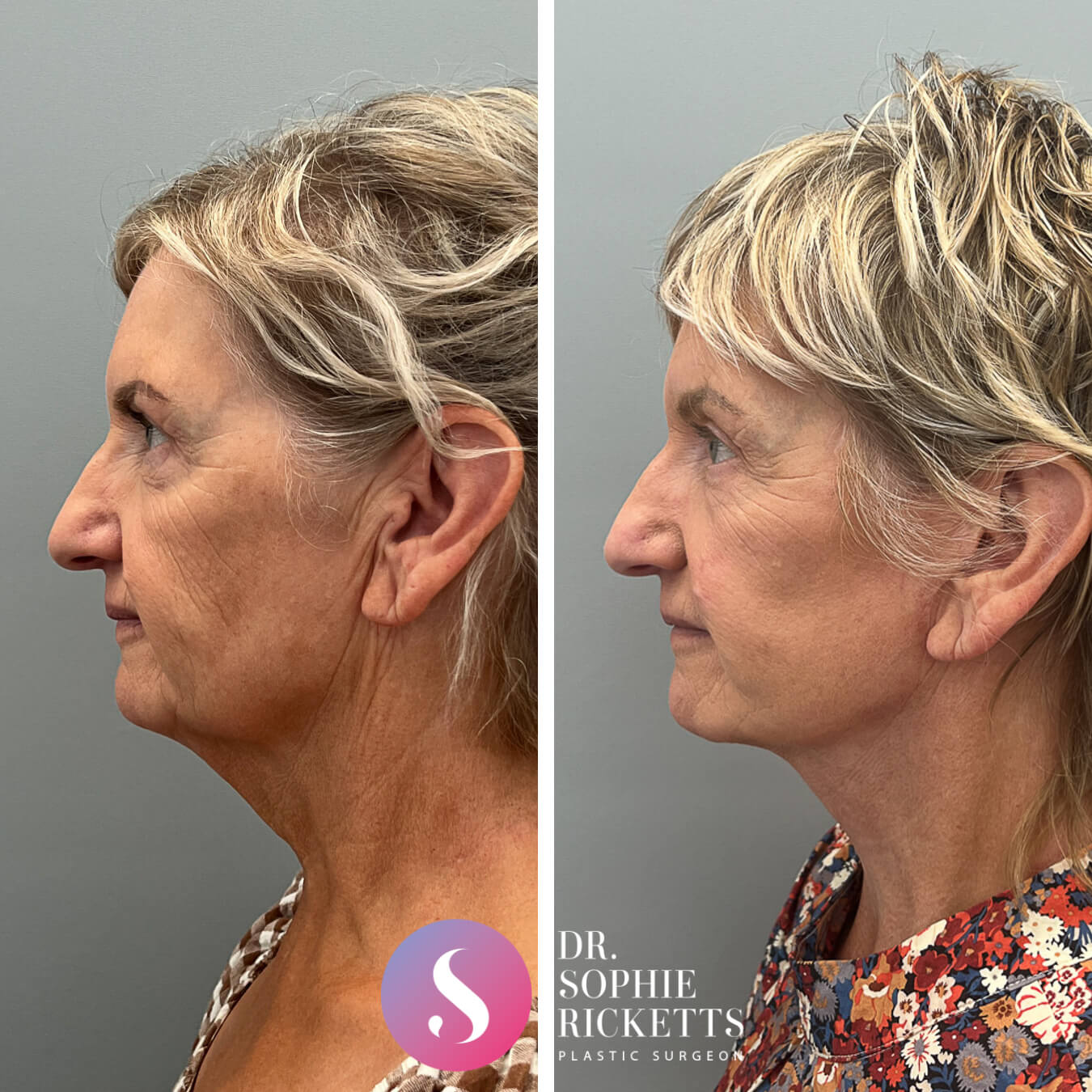
Face Lift
Deep plane Face lift & Anterior Neck lift with platysma plication and lateral temporal brow lift and bilateral upper and lower pinch blepharoplasties | 9 months | Age 60
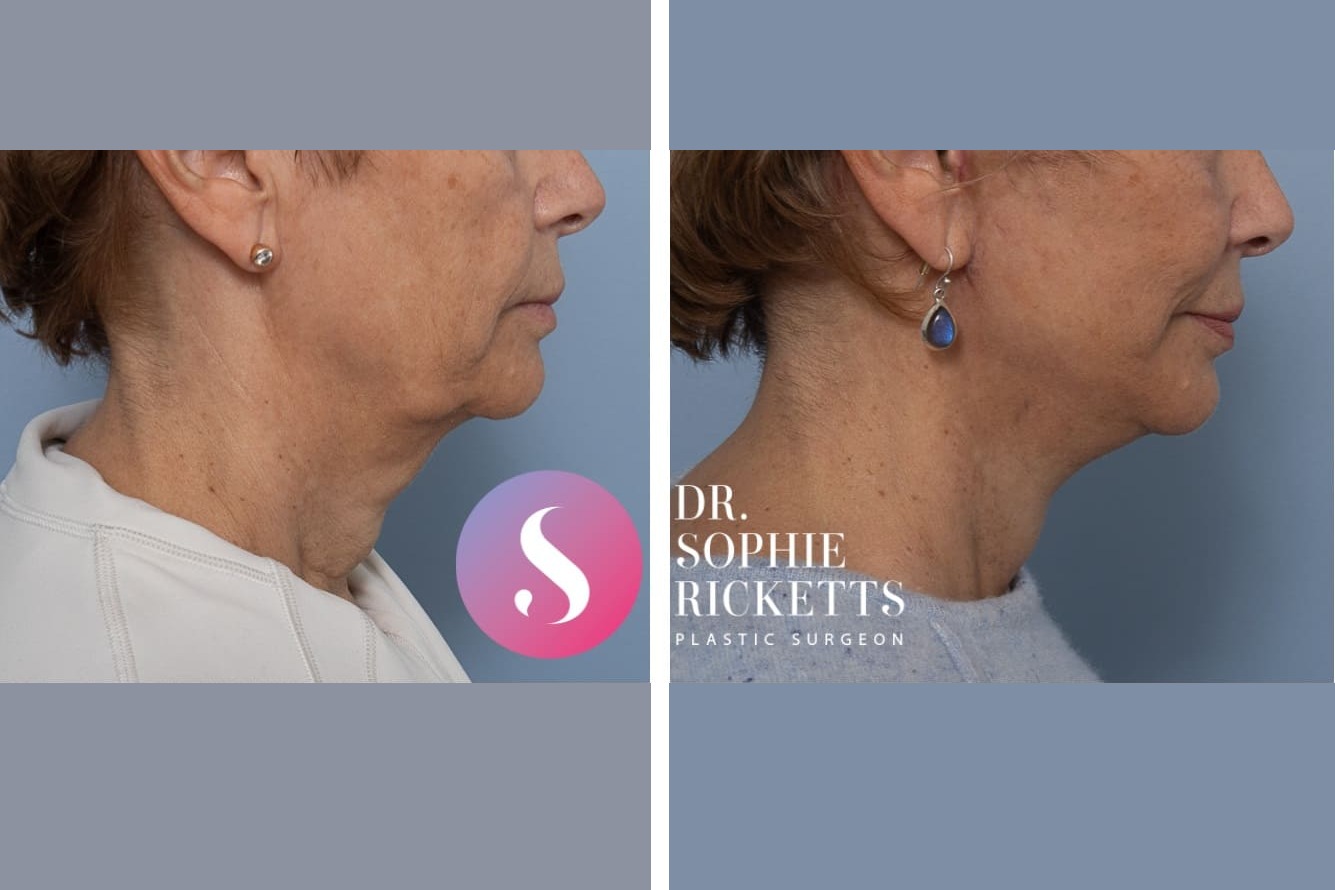
Face and Neck Lift
Deep plane Face & Neck lift and facial fat transfer to temples, midface and malars | 3 months | Age 65
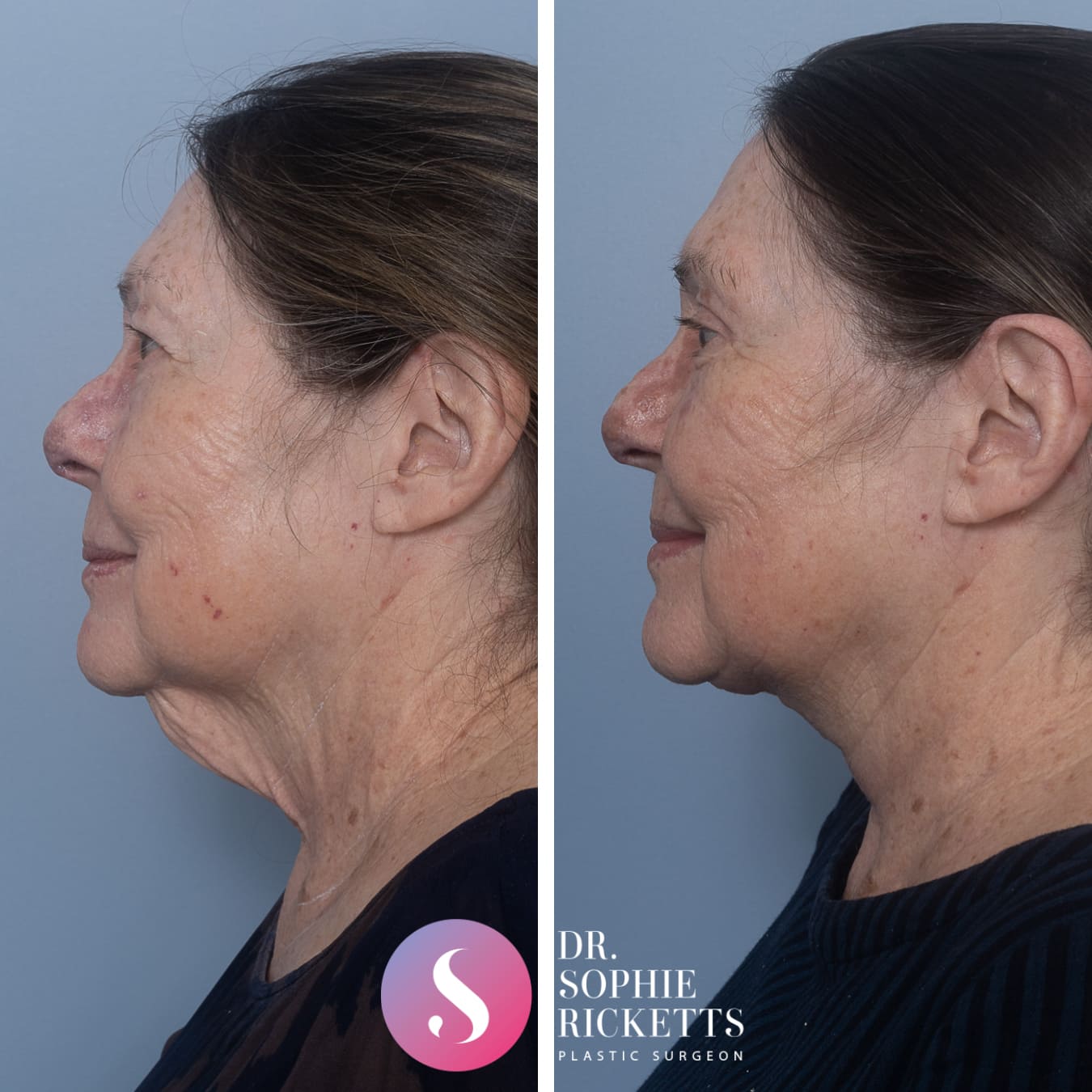
Neck Lift
Direct neck lift + upper blepharoplasty | 6 months
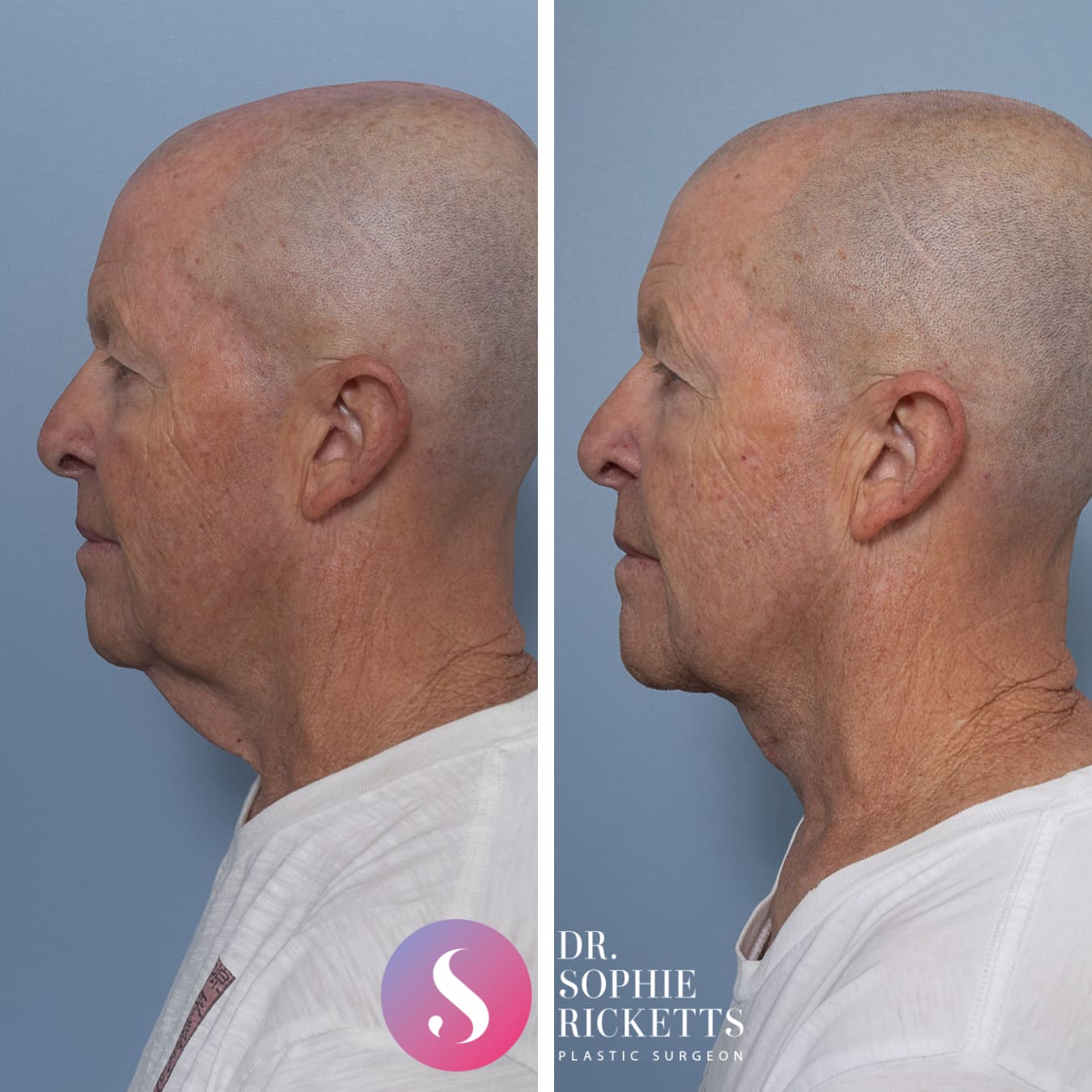
Neck Lift
Direct Neck lift | 3 months | Age 67
Patients have provided written consent. Images are unaltered. Every patient is an individual; outcomes are not indicative of results for others.
Neck lift surgery deserves a special word of explanation. Most neck lift surgery Dr Ricketts performs is in conjunction with a face lift, or at least a lower face lift, because using incisions around the ears to trim excess skin allows the scars to be concealed and is often the best option. The neck and the lower face age together, so treating them together usually gives the most balanced result. There are, however, two alternatives that can be considered in selected circumstances, and she will explain whether either suits you.
Age related changes in the neck are due to several factors. The skin loses elasticity, fat fullness can be seen under the chin, the platysma muscle of the neck loosens and can form visible bands, and the jawline loses its definition. A neck lift can address fat, muscle and skin, and the right combination depends on which of these is the main concern for you. This is why assessment matters, because the most appropriate operation for loose skin may be different from that which addresses fat or muscle banding.
An anterior neck lift uses an incision under the chin. Through this access, Dr Ricketts can remove fat, tighten and support the muscle of the neck by way of a platysmaplasty, and remove a limited amount of skin. It suits people whose main concern is fullness and banding under the chin rather than a large excess of loose skin. Because it does not use incisions around the ears, it cannot remove significant loose skin, so it is not the right choice for everyone.
A direct neck lift uses a zig zag incision from under the chin running down the front of the neck. Your first reaction may be that the scar would be unappealing. The procedure is, however, very effective at removing fat, tightening the muscle and removing large amounts of skin where this is necessary. It is considered for particular patients, often where there is significant loose skin and a willingness to accept a front of neck scar in exchange for a significant change in neck contour. Dr Ricketts will explain honestly whether this approach suits you and show you examples of what the scar is likely to look like over time.
A neck lift may suit you if you have loose neck skin, fullness or banding under the chin, or loss of definition along the jawline, and if you are in reasonable general health. If your main concern is a small pocket of fat with good skin quality, neck liposuction may be a less invasive option, while significant loose skin usually requires a surgical lift to allow skin tightening and removal.
At your consultation, Dr Ricketts examines your neck, chin and jawline, assesses your skin, fat and muscle, and discusses what is concerning you. She explains whether a combined face and neck lift, an anterior neck lift, a direct neck lift or liposuction would suit you, along with the scars, the recovery and the risks. She gives you written information and encourages you to take your time before deciding.
Neck lift surgery is usually performed under general anaesthetic, and depending on the extent it may be a day case or overnight stay if part of a facelift procedure. On the day Dr Ricketts confirms the plan and marks the area before surgery with you sitting upright. A dedicated team cares for you through your surgery and recovery. You will go home in a compression garment and clear instructions, and it is best to have a support person with you.
Neck lift surgery carries the general risks of surgery and anaesthesia as well as risks specific to the neck. General risks include:
Risks more specific to neck surgery include temporary or longer lasting numbness of the skin, injury to the nerves that move the lower lip or the muscle of the neck, visible or irregular contour, persistent banding, and loose skin that does not settle as hoped. Smoking increases the risk of wound healing problems. Results vary between individuals because each person heals differently, and Dr Ricketts will discuss the risks relevant to your chosen technique in detail.
Recovery depends on whether the neck is treated on its own or with a facelift. In the first one to two weeks, expect swelling, bruising and tightness, and you may wear a supportive garment around the neck and chin for a period to support healing. Discomfort is generally manageable with the pain relief we provide, and keeping your head elevated helps reduce swelling early on.
Many people return to desk work and light social activity at around two to three weeks. The neck is one of the slower areas of the face to settle, and contour, tightness and sensation continue to improve over the following weeks and months. Strenuous activity is restricted for several weeks. Dr Ricketts will see you for reviews and guide you on resuming exercise. Healing varies between individuals, and the outcomes one person experiences do not necessarily reflect what another will experience.
Dr Sophie Ricketts is a specialist plastic surgeon with the experience, qualifications and professional standing to give you confidence when choosing neck lift surgery in Melbourne. She is a Fellow of the Australian and New Zealand College of Surgeons (FRACS) and a member of the Australian Society of Plastic Surgeons (ASPS), demonstrating that she has met the rigorous training and ethical standards required of a plastic surgery specialist. Dr Ricketts is a member of the Aesthetic Society of Plastic Surgeons (ASAPS), which verifies her credentials as a recognised specialist. Patient reviews on RealSelf reflect her commitment to honest communication and individualised care. When you consult with Dr Ricketts, you are seeing a surgeon who is transparent about what neck lift surgery can and cannot achieve, and who will explain your options clearly so you can make an informed decision.
Neck lift surgery is performed under general anaesthetic. Depending on the technique, Dr Ricketts makes an incision under the chin, around the ears, or down the front of the neck, then removes fat, tightens and supports the neck muscle, removes excess skin and closes the incisions. In many cases the neck is treated together with the lower face for a balanced and uniform result.
With a combined face and neck lift, the scars sit around the ears and into the hairline. An anterior neck lift uses a small incision under the chin. A direct neck lift places a zig zag scar down the front of the neck, which is more visible but allows significant skin removal. Dr Ricketts will show you where your scars would sit before you decide and show you examples.
Early changes to the contour of the neck are immediately visible once your dressings are removed. The swelling and bruising however usually settles over the first couple of weeks. The recovery of sensation and suppleness of the skin continue to improve over several months, as do the scars, and this timeframe varies from person to person.
Most people take around two to three weeks before returning to work and social activity, with swelling and tightness settling over this period and beyond. A supportive garment is worn for the first week, strenuous activity is restricted for about three to four weeks, and Dr Ricketts will give you specific guidance at your reviews.
If your main concern is a small amount of fat under the chin and fullness and poor definition along the jawline with good skin quality, neck liposuction may be effective. If you have loose skin or muscle banding, a neck lift surgery is usually needed, because liposuction alone does not tighten skin or muscle. Dr Ricketts will assess your neck and explain which approach suits you.