MED0001204761 This website contains imagery suitable for audiences 18+. All surgery contains risks read more here
MED0001204761 This website contains imagery suitable for audiences 18+. All surgery contains risks read more here


FACE PROCEDURES
Neck and chin liposuction in Melbourne with specialist plastic surgeon Dr Sophie Ricketts. Suitability, risks and recovery.
ON THIS PAGE
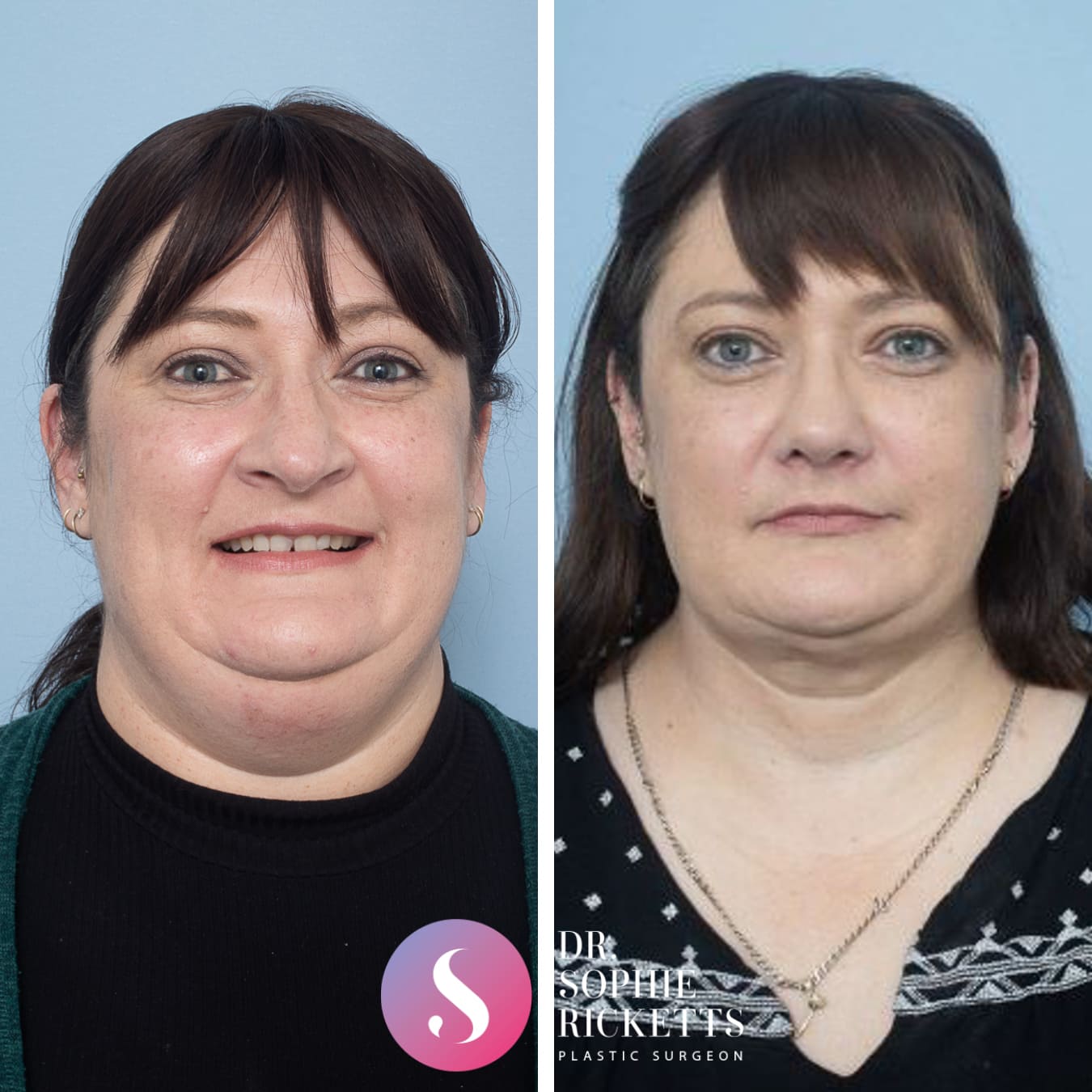
Rhinoplasty
Open Rhinoplasty and neck liposuction | 1 year | Age 49
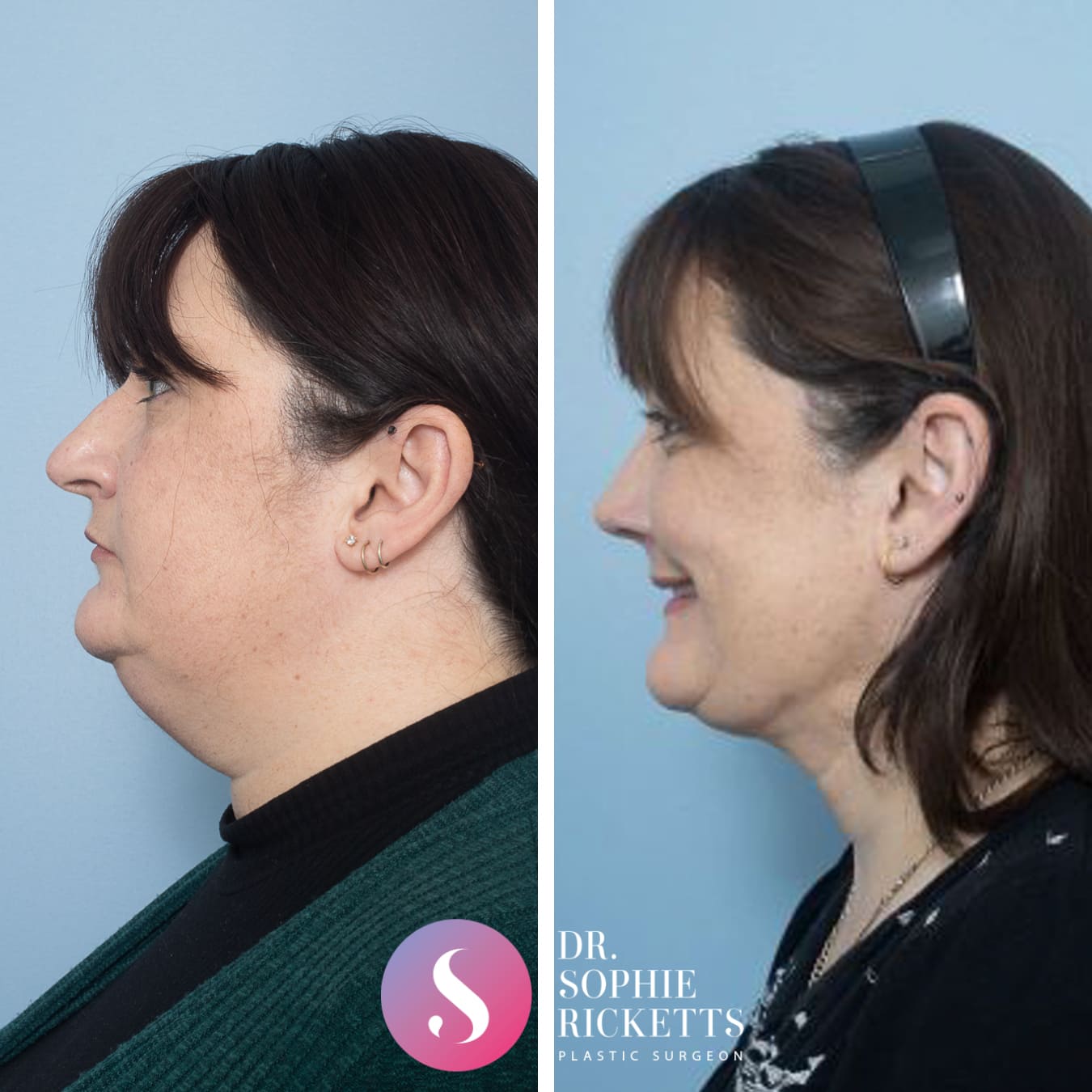
Rhinoplasty
Open Rhinoplasty and neck liposuction | 1 year | Age 49
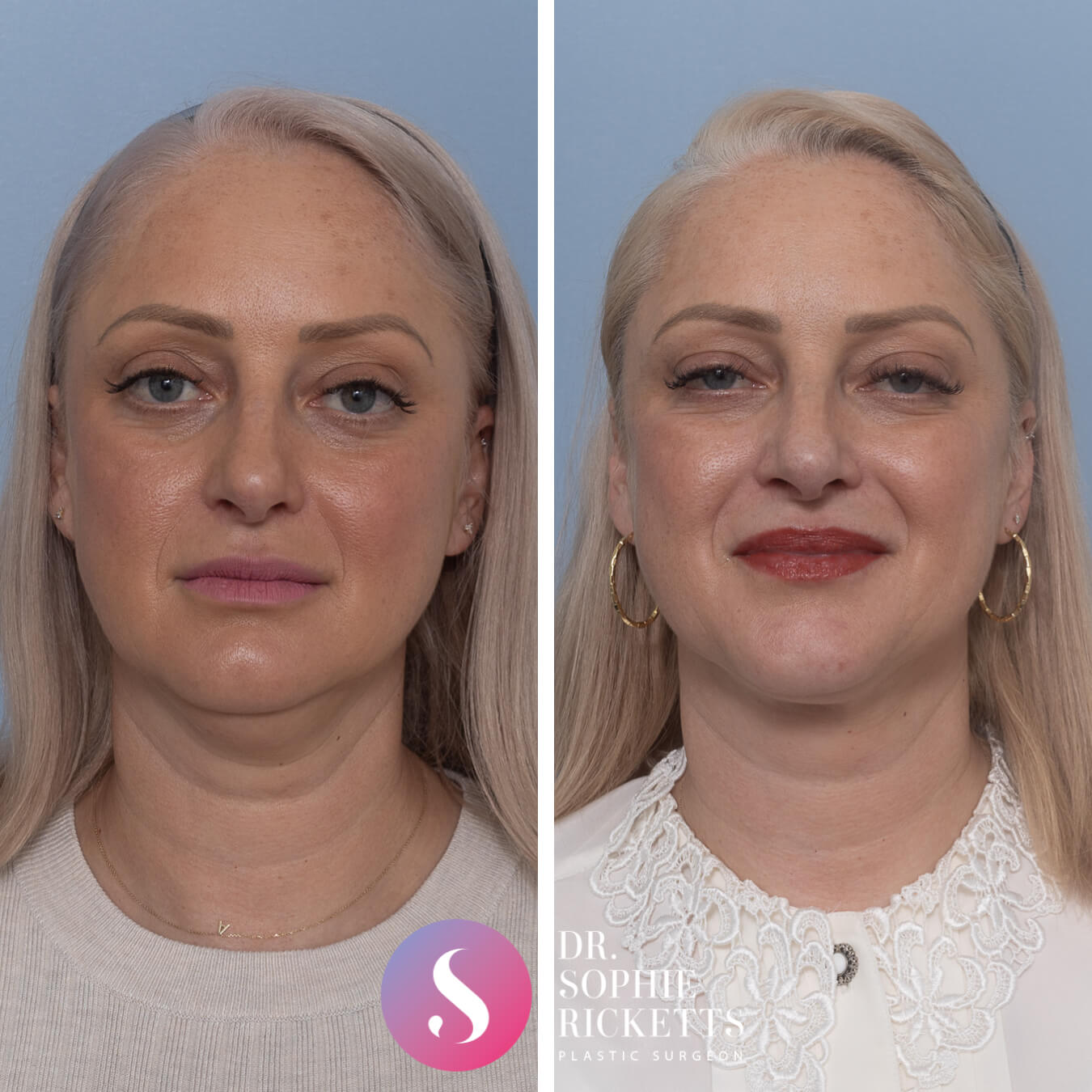
Neck Liposuction
Neck liposuction - predominantly submental + jowl liposuction | 3 months | Age 41
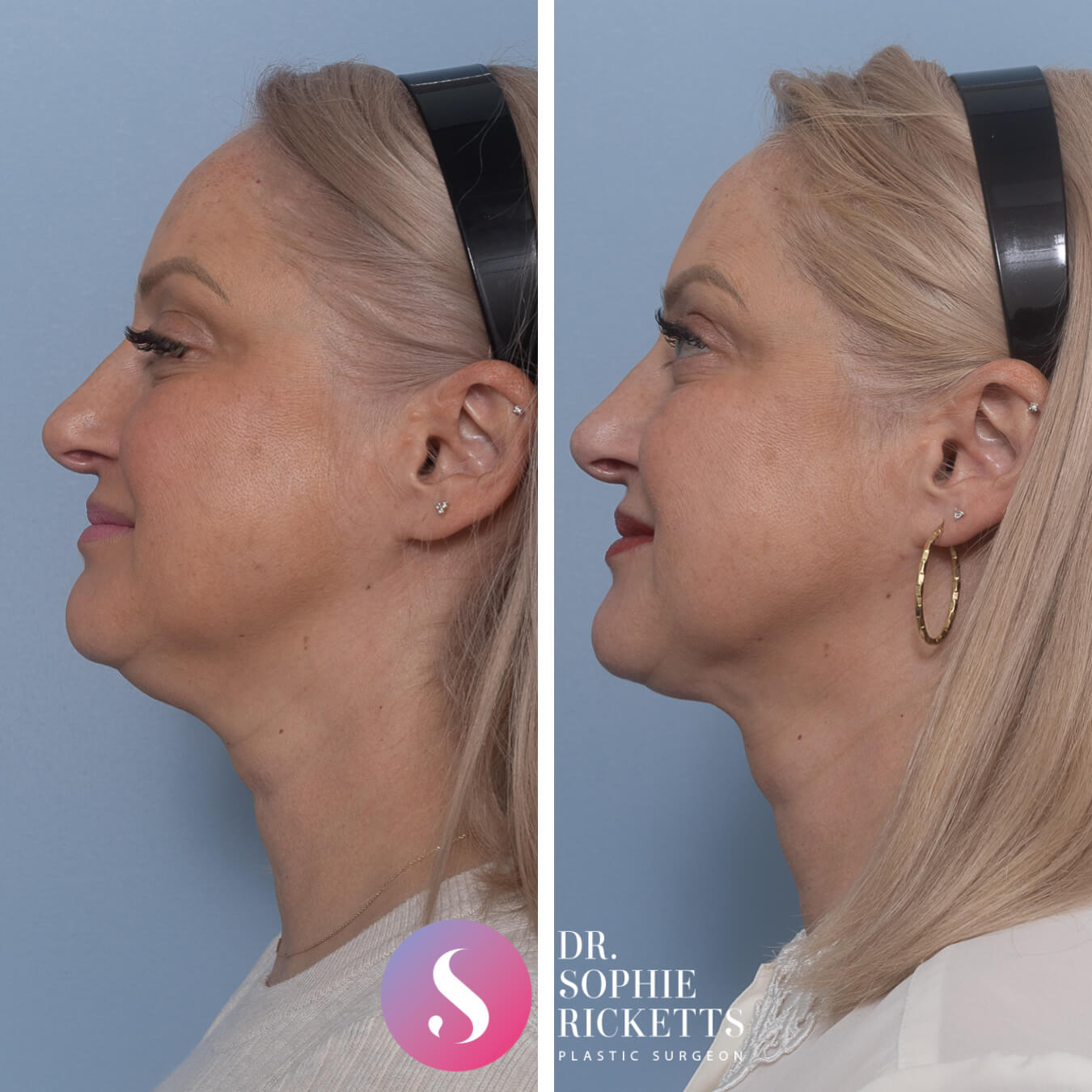
Neck Liposuction
Neck liposuction - predominantly submental + jowl liposuction | 3 months | Age 41
Patients have provided written consent. Images are unaltered. Every patient is an individual; outcomes are not indicative of results for others.
Liposuction of the neck and chin removes fat in select circumstances, targeting areas such as under the chin and along the jawline. It is best suited to people with good skin quality and a localised excess of fat rather than significant loose skin. It is not a substitute for weight loss, and it is not the right operation for everyone who is concerned about their neck, which is why careful assessment is important.
The aim is a careful, considered removal of fat that improves the definition of the neck and jawline while respecting the supporting tissues. Removing too much fat, or treating a neck that has loose skin or muscle banding, can produce a poor result that is difficult to correct, which is why Dr Ricketts assesses the cause of your concern before recommending liposuction. When the underlying issue is loose skin or muscle, a neck lift or a combined face and neck lift may be more appropriate.
Neck and chin liposuction may suit you if you have a defined pocket of fat under the chin or along the jawline and your skin has good elasticity, so that it can shrink back after the fat is removed. It is generally more suitable for younger patients, whose skin tends to retract better. It is less suitable if your main concern is loose skin or muscle banding, or if your skin has reduced elasticity. Dr Ricketts will examine your neck and tell you honestly whether liposuction is likely to give you a good result or whether another procedure would serve you better.
At your consultation, Dr Ricketts examines your neck and jawline, pinches and assesses the fat and the quality of your skin, and discusses what is concerning you. She explains whether liposuction alone is likely to help, or whether a neck lift or other procedure would suit you better, along with the recovery and the risks. She gives you written information and time to consider your decision.
Surgery is performed under general anaesthetic, or local anaesthetic with sedation in some cases, and most patients go home the same day. Before the procedure begins, Dr Ricketts reviews the plan and marks the areas to be treated. The team will guide you through admission and recovery on the day, and you will be sent home with a supportive compression garment and written aftercare instructions. A support person is required to take you home.
Neck and chin liposuction carries the general risks of surgery and anaesthesia as well as some specific risks. General risks include:
Risks more specific to neck liposuction include contour irregularity, lumpiness or unevenness, loose skin that does not retract as hoped, temporary numbness, fluid collection, and, rarely, injury to the nerve that moves the lower lip. People with reduced skin elasticity are more likely to have loose skin. Because skin behaves differently in each person, the result varies, and Dr Ricketts will tell you honestly whether liposuction is likely to suit you.
Neck and chin liposuction is commonly performed as a day case. A supportive garment is usually worn around the neck and chin for a period or at least a week to help the skin settle. In the first one to two weeks, expect swelling and bruising, and the area may feel firm or lumpy as it heals, which settles over the following weeks.
Return to desk work is often possible within a week, though this depends on how visible the bruising is. Strenuous activity needs to be avoided for two or three weeks. Swelling gradually resolves over about six weeks, and the skin retracts as the final contour becomes apparent. Recovery timelines differ from person to person, as does the final result.
Dr Sophie Ricketts is a Melbourne plastic surgeon with FRACS in Plastic and Reconstructive Surgery through the Royal Australasian College of Surgeons. She is a member of both ASPS and ASAPS and completed her surgical training through an accredited RACS program. Patient reviews on RealSelf come from people who have attended a consultation or undergone a procedure with Dr Ricketts. To learn more, call the clinic to arrange an appointment.
The procedure is performed under general anaesthetic or, in some cases, local anaesthetic with sedation. Dr Ricketts makes very small incisions under the chin or behind the ears and removes fat with fine instruments, working evenly to improve the contour of the neck and jawline. A supportive compression garment is applied at the end.
Liposuction is unlikely to suit you if your main concern is loose skin or muscle banding rather than excess fat, or if your skin has reduced elasticity and is unlikely to retract after fat is removed. In these situations, a neck lift or a combined face and neck lift may give a better result. It is also not a treatment for general weight loss.
The risks more specific to this procedure include contour irregularity or lumpiness, loose skin that does not retract as hoped, temporary numbness, fluid collection, and, rarely, injury to the nerve that moves the lower lip. Dr Ricketts will discuss how these apply to you at your consultation.
The fat cells that are removed do not return, but your weight and your skin continue to change over time. Significant weight gain can affect the result, and skin quality changes with age. The outcome varies between individuals.
In people with good skin elasticity, the skin often retracts after the fat is removed, which improves the contour. In people with reduced elasticity, the skin may not retract well, and loose skin can remain. This is why Dr Ricketts assesses your skin quality carefully before recommending liposuction, and why a lift may be a better option for some people.