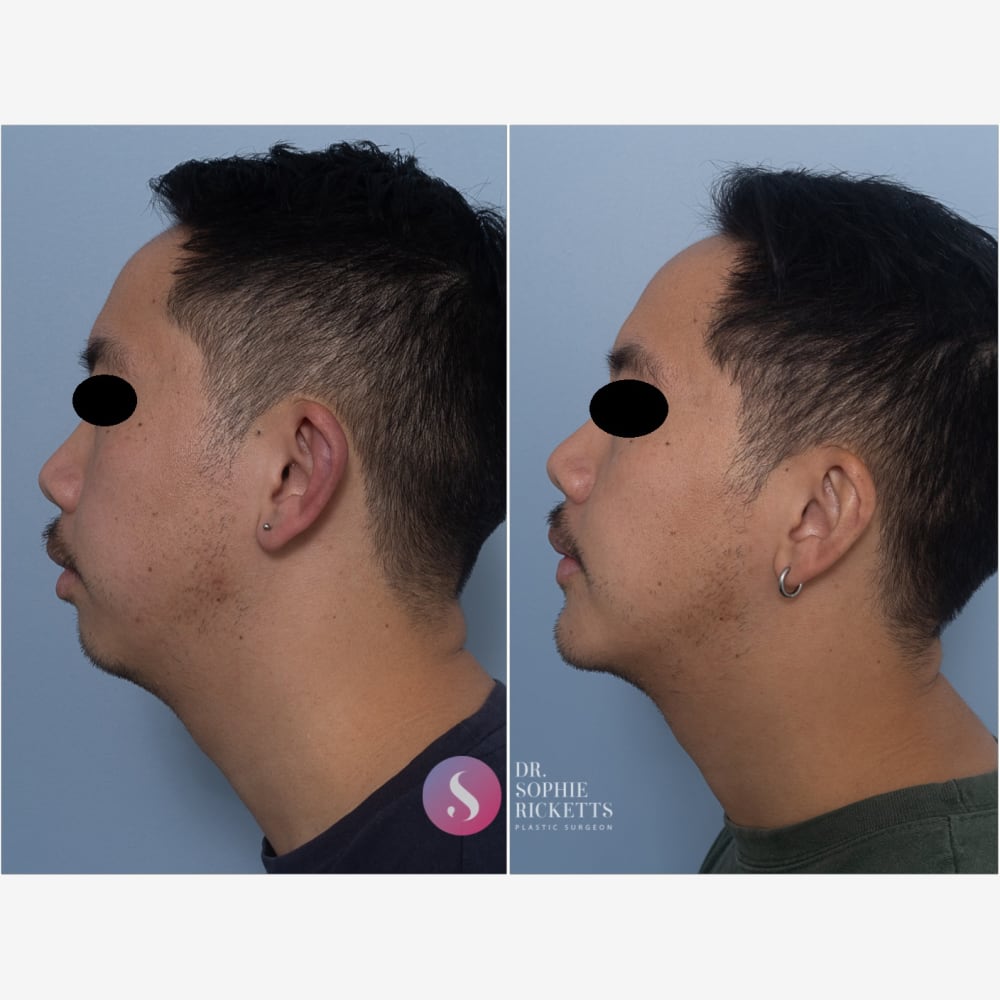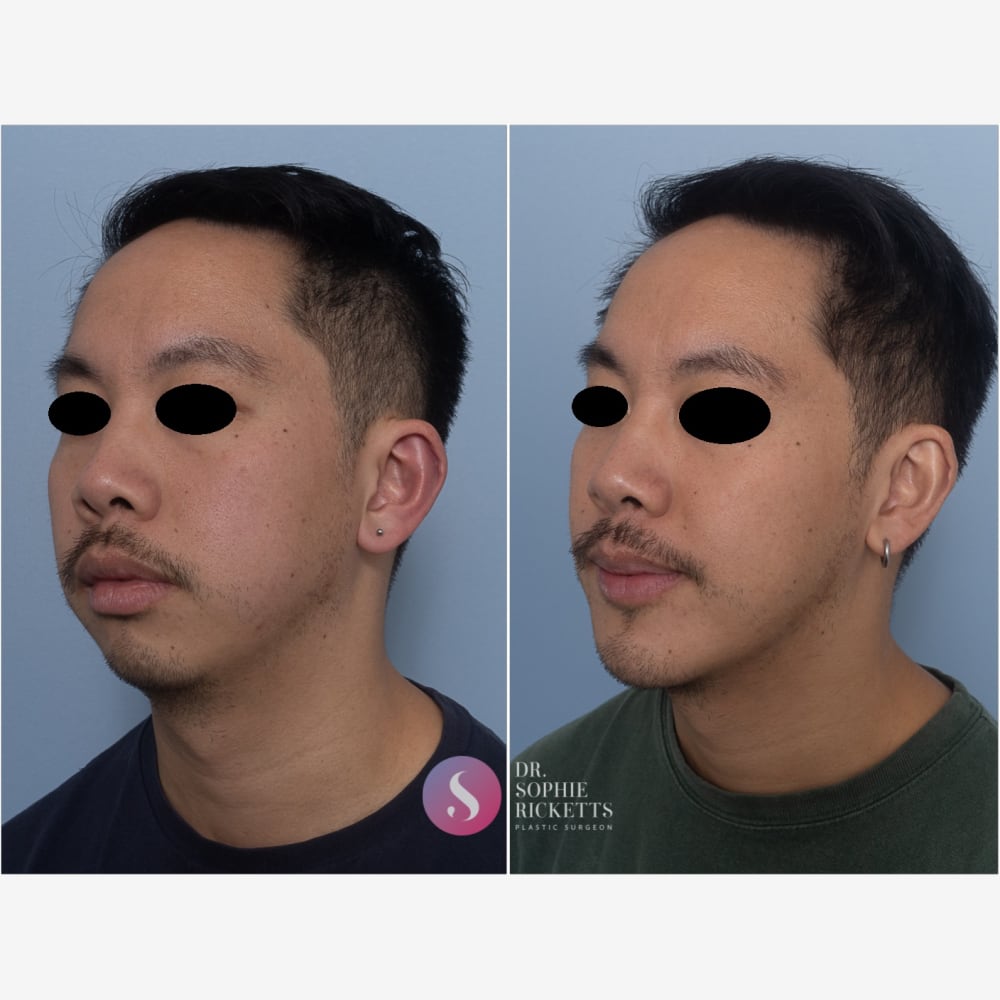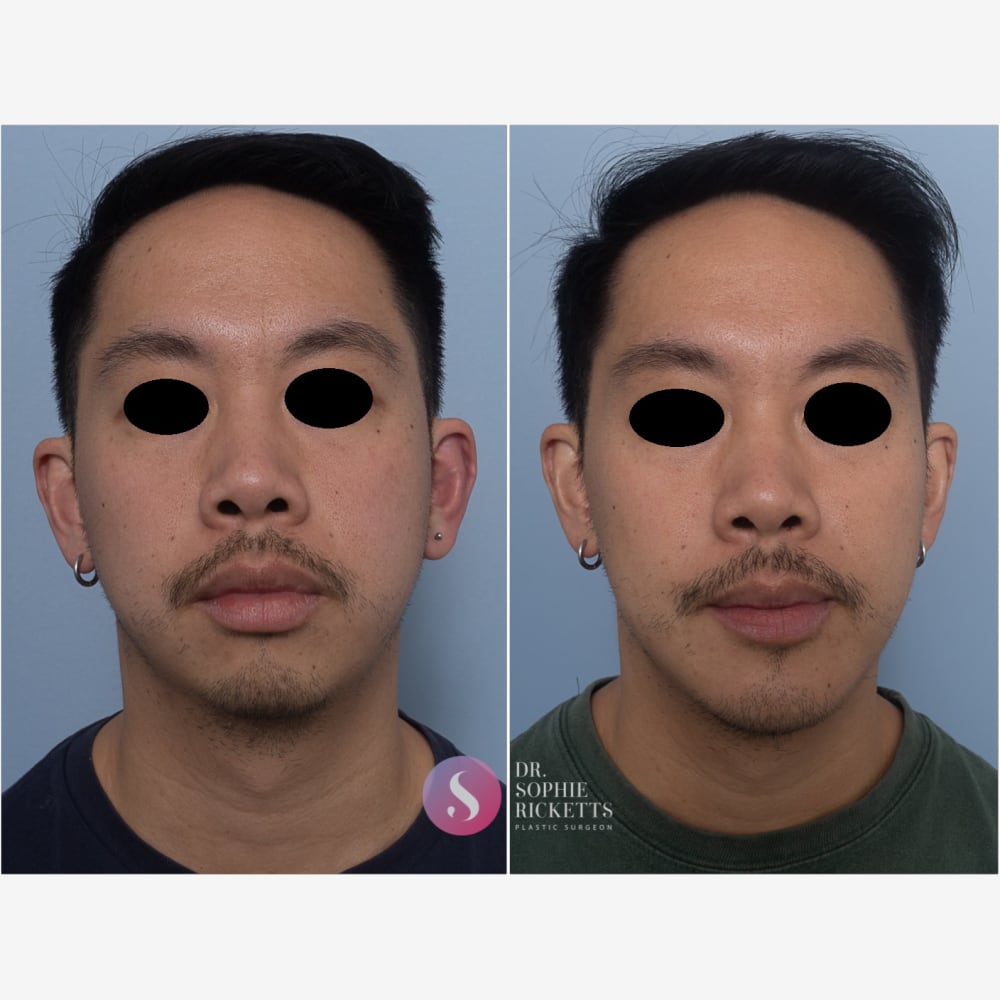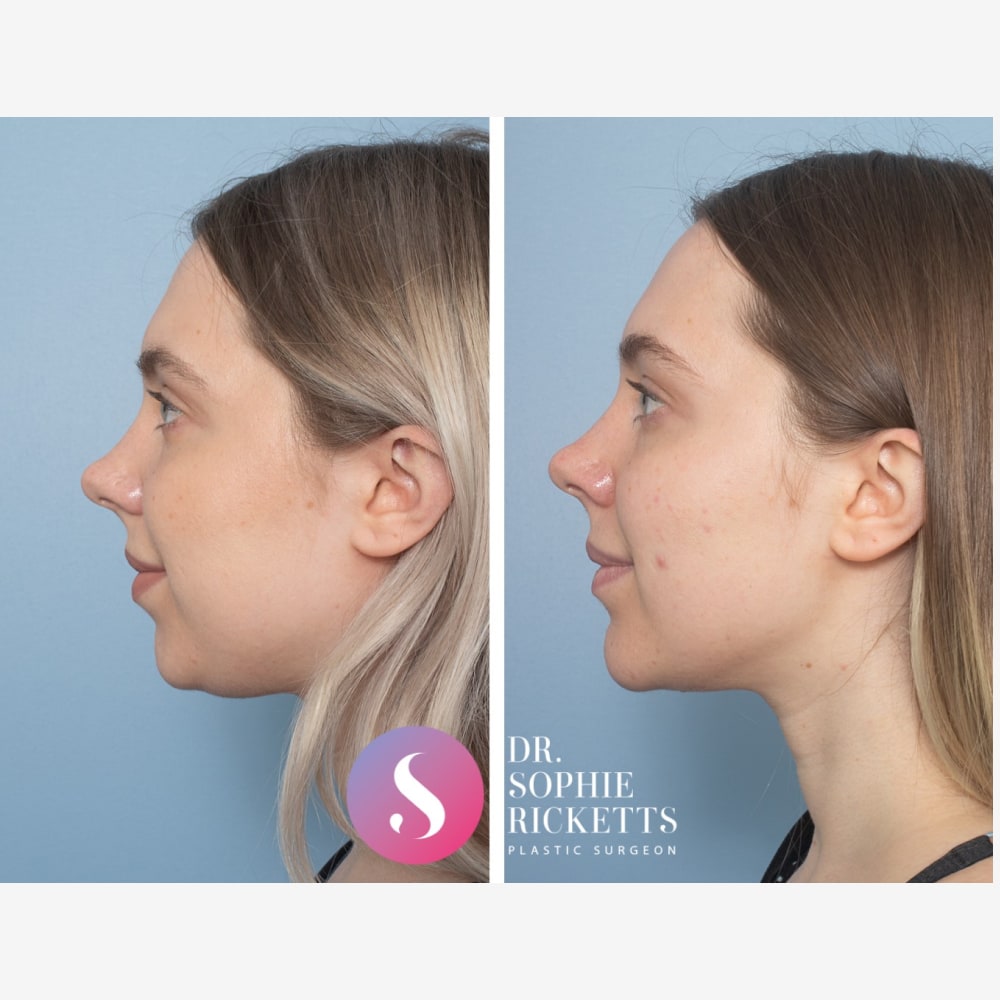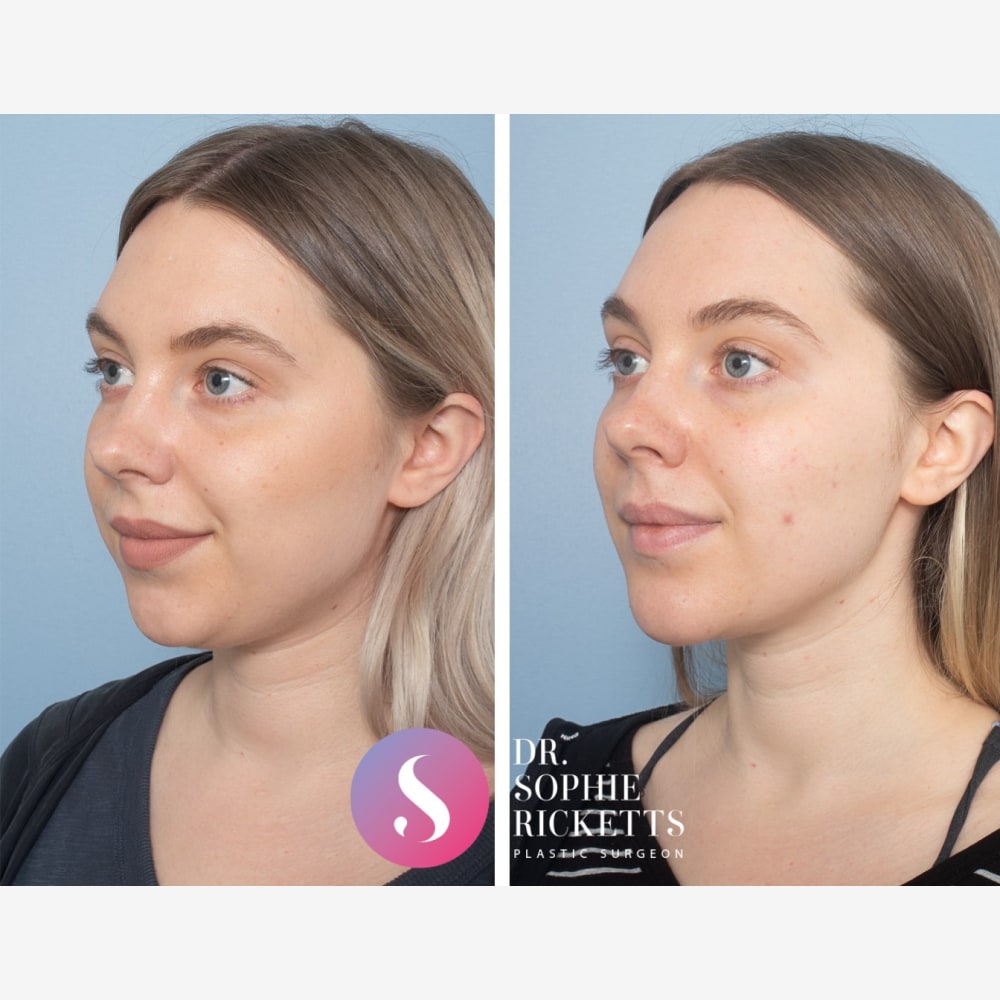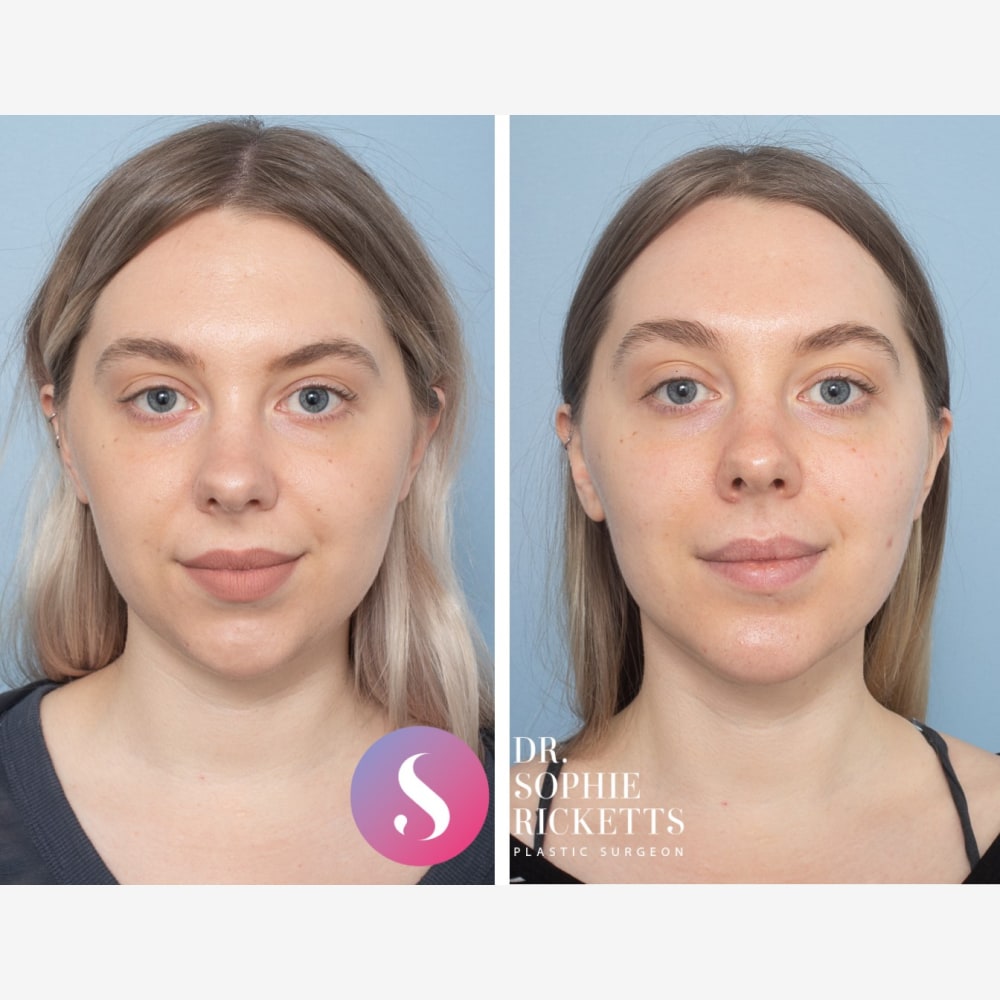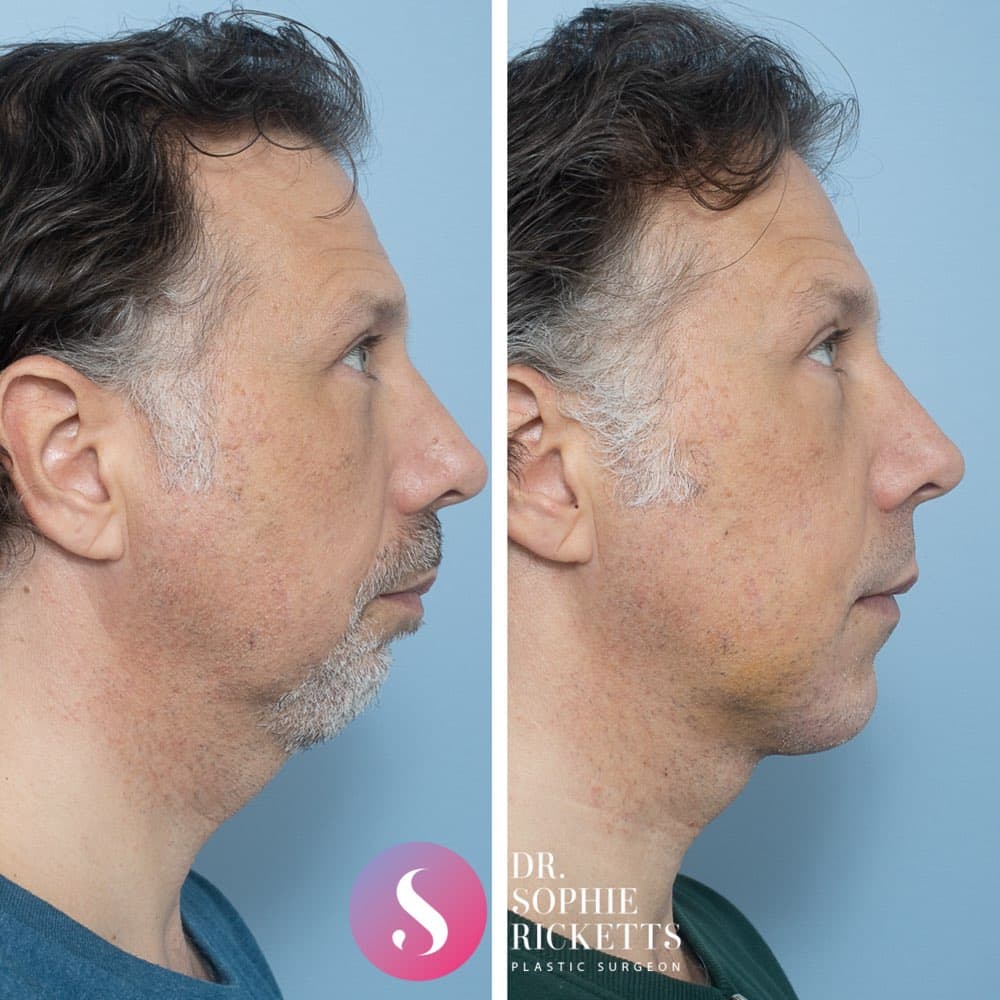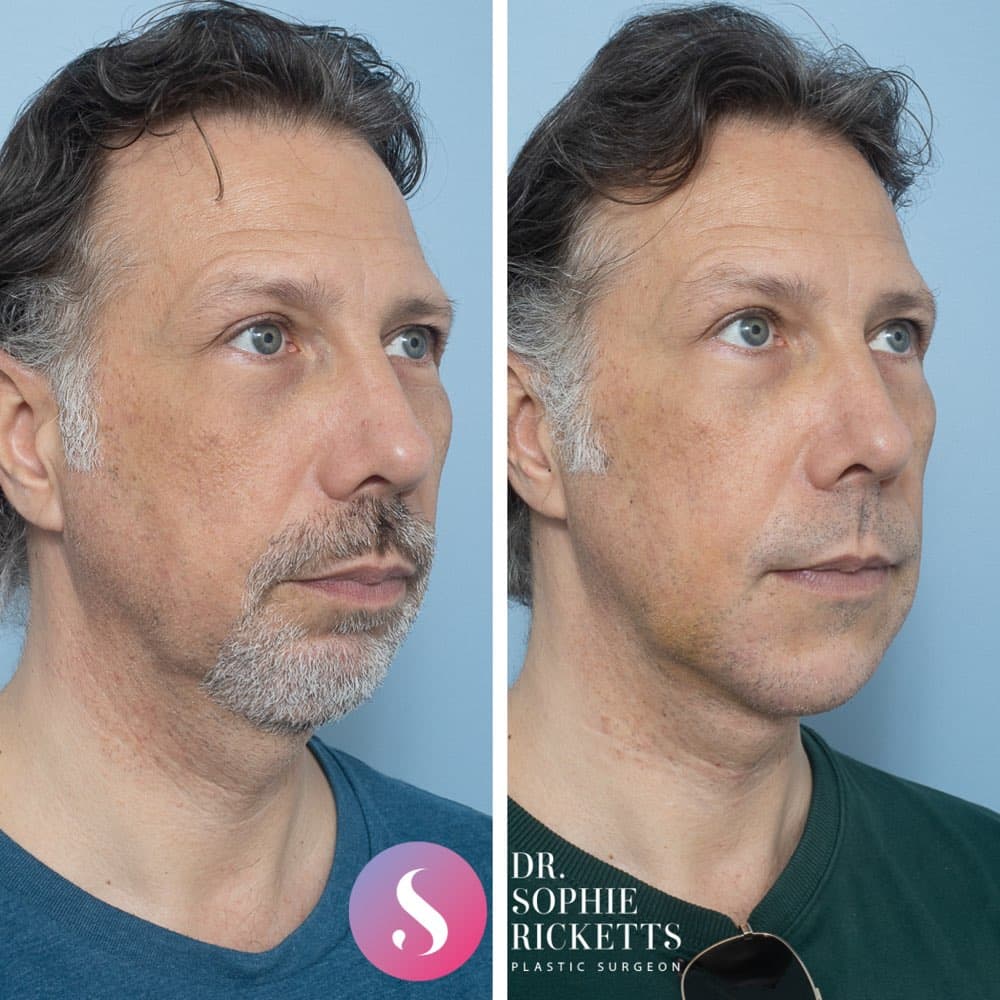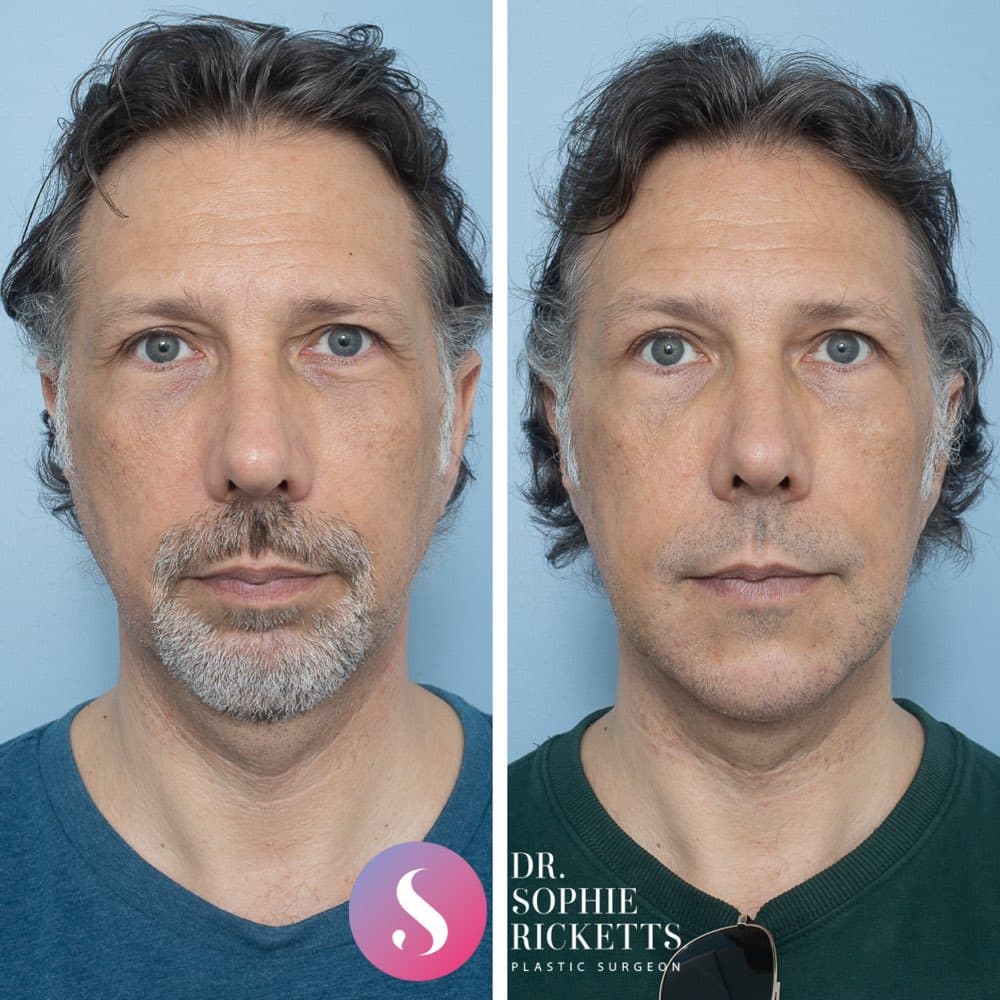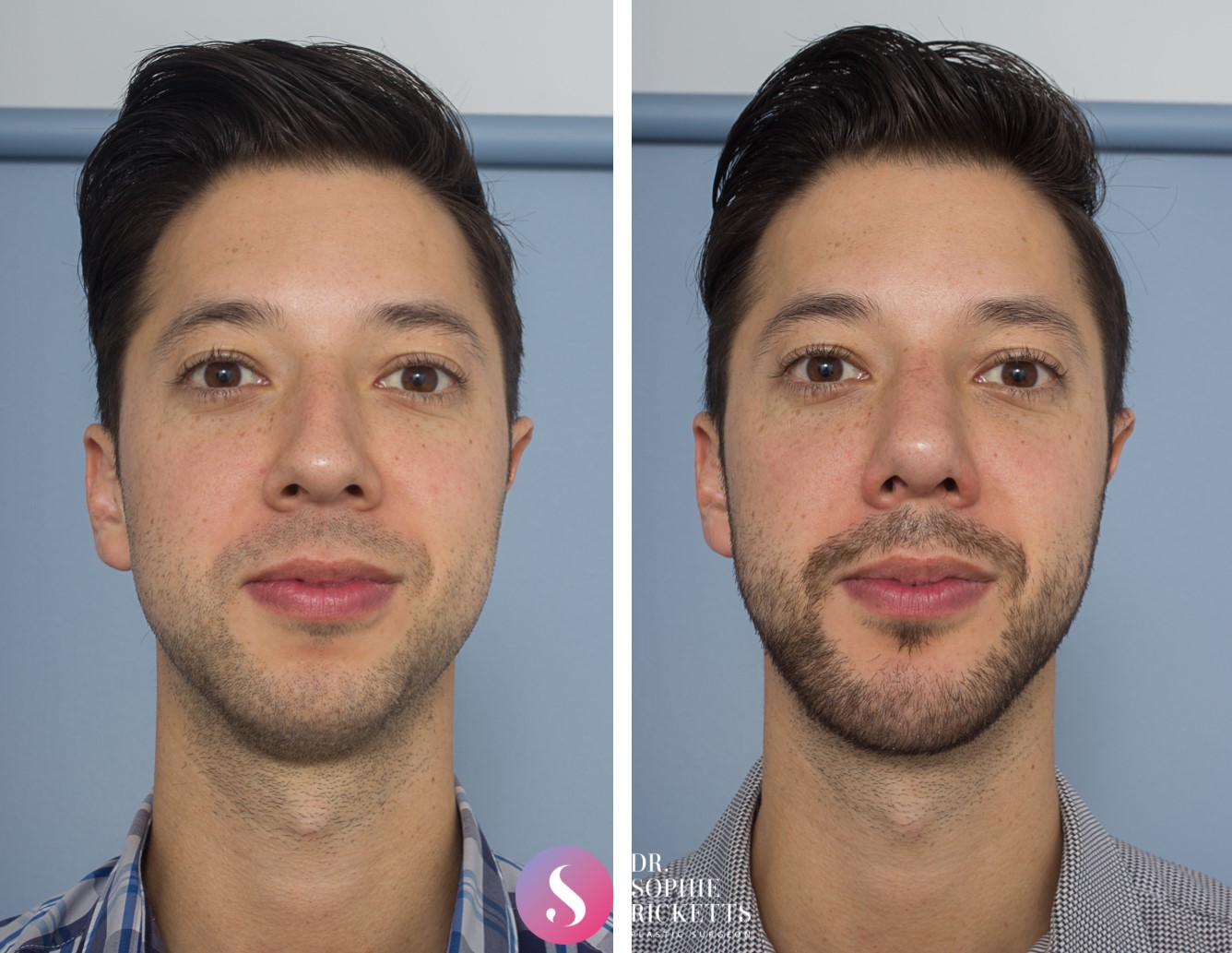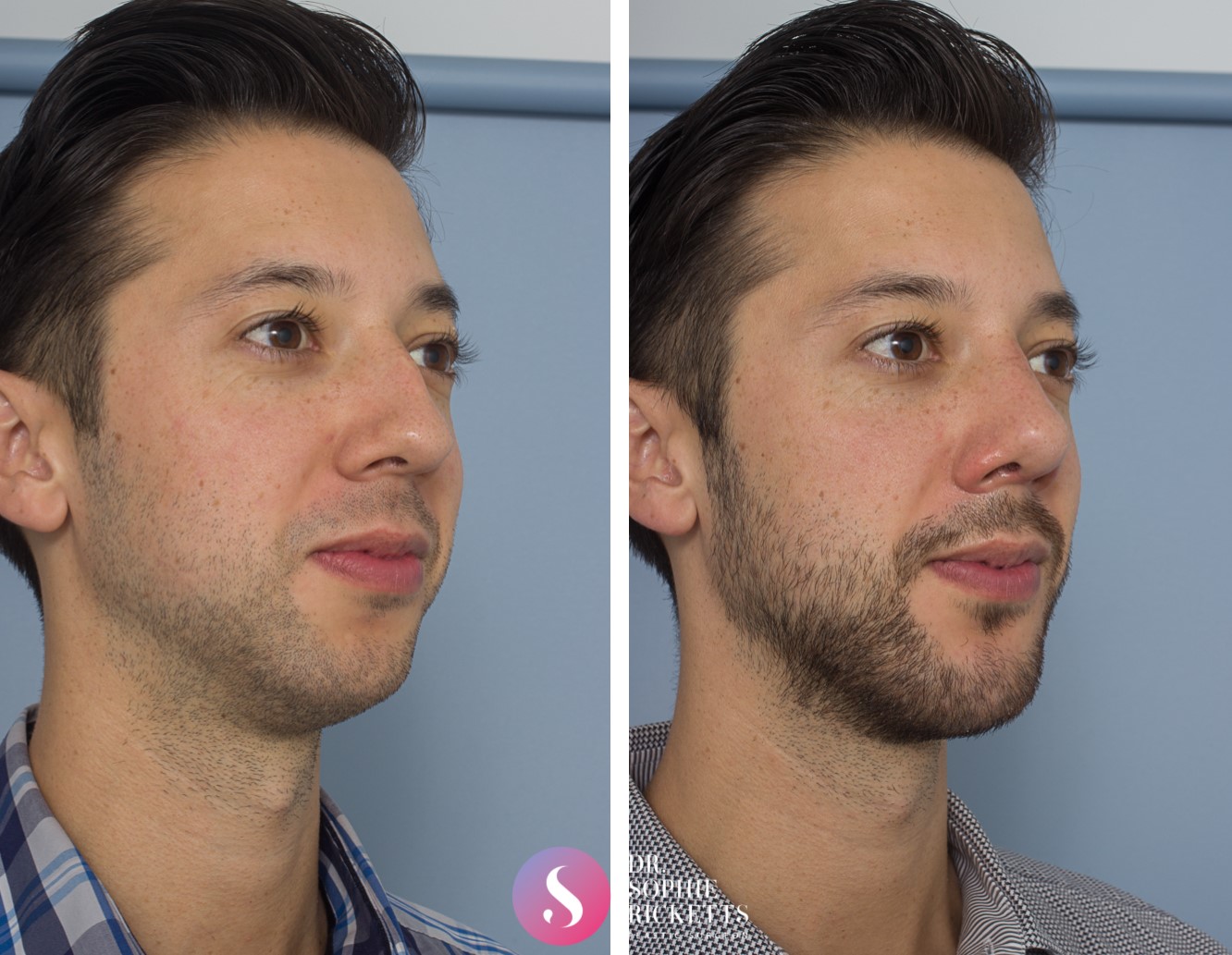

Why might chin surgery be considered?
Chin surgery, also known as genioplasty or chin implant surgery, is a procedure used to change the position, projection, or shape of the chin. Depending on individual anatomy and treatment goals, this may involve advancing the chin, reducing prominence, or altering contour.
A chin implant may be used to increase projection and is typically secured to the jawbone using screws. Alternatively, sliding genioplasty involves repositioning the chin bone through a controlled surgical cut, with the bone stabilised using plates and screws. Each surgical approach has specific indications, considerations, and potential risks, and suitability varies between individuals.
During consultation, Dr Sophie Ricketts will assess your medical history, anatomy, and treatment goals. Potential risks, benefits, alternatives, and expected recovery considerations will be discussed to determine whether chin surgery may be an appropriate option for you.
Chin Augmentation: Risks and Possible Complications
Any surgical or invasive procedure carries inherent risks. While Dr Sophie Ricketts follows rigorous clinical protocols to manage and address potential complications, it is important for patients to be fully informed before deciding to proceed with surgery.
General Surgical Risks
-
Infection: May require antibiotics or, in rare cases, removal of the implant.
-
Bleeding & Hematoma: A collection of blood under the skin that may require surgical drainage.
-
Anaesthesia Risks: Potential reactions to general anaesthesia, including respiratory or cardiac complications.
-
Poor Wound Healing: Risk is significantly higher in smokers or patients with certain medical conditions.
Risks Specific to Chin Augmentation
-
Nerve Injury: Temporary or permanent numbness or altered sensation in the lower lip, teeth, or chin.
-
Implant Displacement: The implant may shift or move, which could require a secondary procedure to reposition or replace it.
-
Asymmetry: The final result may not be perfectly symmetrical due to natural underlying bone structure or healing.
-
Bone Resorption: For some patients, the bone under a chin implant may erode slightly over time (usually asymptomatic).
-
Lower Lip Weakness: Temporary weakness or reduced movement of the lower lip during the healing phase.
-
Dissatisfaction with Aesthetic Outcome: The need for revision surgery if the desired projection or shape is not achieved.
Your Consultation Process
A consultation with Dr Sophie Ricketts, Specialist Plastic Surgeon, is a comprehensive clinical assessment to determine your suitability for surgery. This process is designed to ensure you are fully informed of the potential risks, expected clinical outcomes, and available non-surgical alternatives relevant to your circumstances.
In accordance with the Medical Board of Australia’s mandatory guidelines for cosmetic surgery:
-
Clinical Evaluation: Dr Ricketts will assess your medical history and physical anatomy to determine if the procedure is clinically appropriate.
-
Psychological Screening: A mandatory assessment for Body Dysmorphic Disorder (BDD) and psychological readiness is required for all patients.
-
GP Referral: You must provide a valid referral from your General Practitioner prior to your initial consultation.
-
Two-Stage Process: A minimum of two pre-operative consultations is required.
-
Cooling-Off Period: After your second consultation, a mandatory 7-day cooling-off period must elapse before any surgery can be booked or payments made.
Gallery
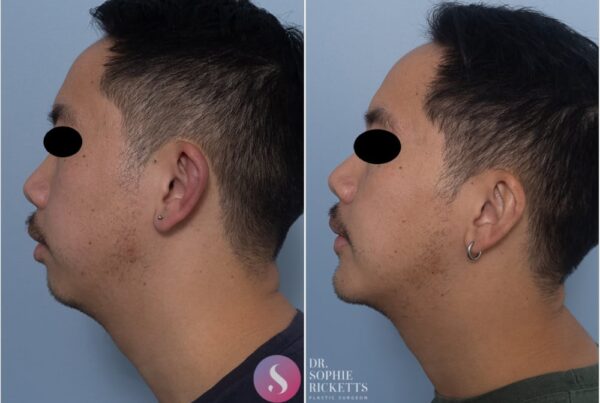
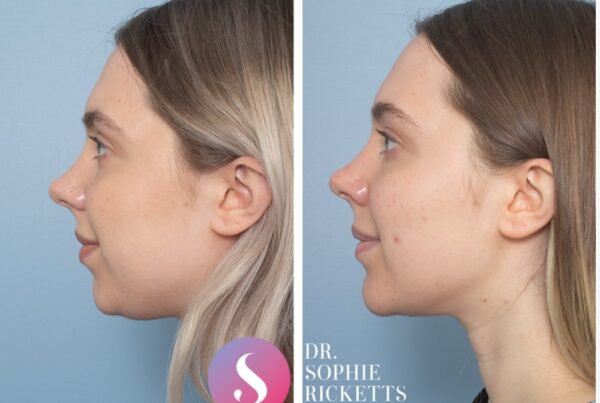
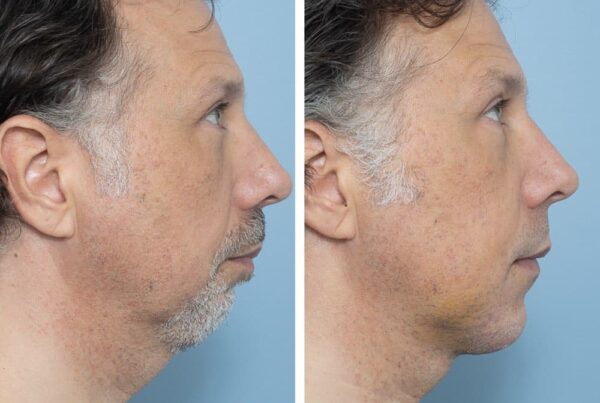
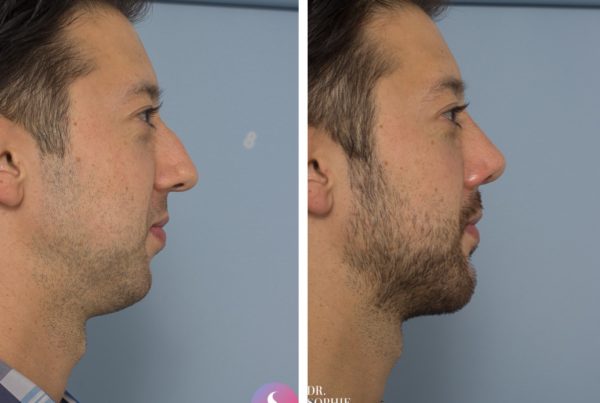
Individual results vary. All surgical procedures carry risks and require a consultation to determine suitability.
These images are for illustrative purposes only and do not guarantee a specific outcome. Before proceeding, you should seek a second opinion from an appropriately qualified health practitioner.
FAQ
What is chin augmentation?
Chin augmentation, also called mentoplasty or genioplasty, is a surgical procedure that changes the position or shape of the chin. This may involve placing an implant, repositioning the chin bone, or using other techniques depending on individual anatomy and clinical circumstances.
The procedure can be performed under general anaesthesia. The specific approach, along with the associated risks, recovery, and alternatives, will be discussed with Dr Sophie Ricketts during a consultation to determine whether this surgery may be appropriate for you.
Is Chin Augmentation Painful?
As with any surgical procedure, chin augmentation can involve discomfort during the recovery period. Anaesthesia is used during the operation so you will not feel pain at the time of surgery.
After the procedure, it is common to experience swelling, bruising, a feeling of tightness, or tenderness in the area. These symptoms usually change over the first few days and weeks, but the degree and duration vary between individuals. Your surgeon may recommend medications to help manage discomfort, and will provide specific postoperative instructions based on your circumstances.
Any unexpected or severe pain should be discussed promptly with Dr Sophie.
Will the results change as I age?
Chin surgery provides lasting structural changes, but natural ageing may alter facial appearance over time. Dr Sophie Ricketts plans procedures to maintain proportional alignment, though normal changes in bone, tissue and skin may subtly affect long-term results.
When will I see the final results?
Changes are visible immediately after surgery, but swelling and bruising may take 2-3 weeks to resolve. Final results generally appear after about 3 months, once healing is complete and all swelling around the chin has settled.
How long does chin surgery take?
Chin surgery usually takes between 1 to 2 hours, depending on the procedure, and is generally performed as a day case procedure under general anaesthesia.
What are the risks of chin surgery?
As with any surgical procedure, risks include infection, bleeding, numbness, asymmetry or implant movement if an implant is used. Established clinical guidelines are followed to minimise risks, and potential complications and management strategies are reviewed during a consultation.
What concerns can chin surgery address?
Chin surgery with Dr Sophie Ricketts can help adjust the size, projection or shape of the chin to change facial profile and balance. It can be used for chins that are underdeveloped, recessed or prominent, and to improve symmetry. Each procedure is specific to the individual’s anatomy proportions, providing balance with the rest of the face.
Will I Have Scars After Chin Augmentation?
Scars for chin augmentation are strategically placed to be as inconspicuous as possible. For chin implants, incisions are often made inside the mouth, leaving no visible external scars. If an external incision is necessary, it is usually placed under the chin in a natural crease, where it is less noticeable. For sliding genioplasty, the incision is typically made inside the mouth avoiding visible external scarring.
Who is a suitable for chin augmentation?
Patient Suitability for Chin Augmentation
Chin augmentation, also known as mentoplasty or genioplasty, is a surgical procedure intended to alter the shape or projection of the chin. A formal clinical assessment is required to determine suitability.
Clinical Indications for Surgery
A suitable candidate for chin augmentation may include individuals with:
- Microgenia: A small or recessed chin that affects facial proportions.
- Facial Asymmetry: Significant structural imbalance of the lower face or jawline.
- Mandibular Deficiency: Where the chin bone has not fully developed in proportion to the nose or lips.
Mandatory Requirements for Candidates
Under current Australian regulations, all patients must meet the following criteria before surgery can be considered:
- GP Referral: A valid referral from your General Practitioner is mandatory for all cosmetic surgery consultations.
- Psychological Screening: Patients must undergo screening for Body Dysmorphic Disorder (BDD) and a psychological readiness assessment to ensure surgery is in their best interest.
- Physical Health: Candidates must be in good overall health, as certain medical conditions or smoking can significantly increase the risk of complications.
- Realistic Expectations: It is essential that patients understand the surgical limitations and that results vary between individuals. Surgery is intended for clinical improvement, not “perfection.”
Consultation and Cooling-Off Period
Suitability is determined over a minimum of two consultations. If you are deemed a suitable candidate and choose to proceed, a mandatory 7-day cooling-off period applies after signing the consent forms before the procedure can be booked.
What is the recovery like after chin augmentation?
Recovery after chin augmentation varies between individuals and depends on the technique used. When the incision is placed inside the mouth, the lining typically heals over the first one to two weeks. Swelling, bruising, or a feeling of tightness in the area is common and usually changes over the early stages of recovery. You will attend follow-up appointments with your surgeon to monitor your recovery.
It may take several weeks or longer for the final appearance to settle. Your surgeon will provide guidance on postoperative care, expected healing timeframes, and when normal activities can be resumed.
How long do the changes from chin augmentation last?
The changes achieved with chin augmentation are permanent. Chin implants are designed to remain in place long term, while sliding genioplasty involves repositioning the chin bone and bone healing in its new position. Both approaches have different considerations regarding stability, healing, and future revision options. The soft tissues overlying the chin will, however, continue to age and change over time.
These factors will be discussed in detail with Dr Sophie Ricketts during your consultation so you can understand the differences between each approach, the potential risks, and what may be suitable for your circumstances.
How do I know which type of chin procedure is right for me?
Dr Sophie Ricketts will assess your facial structure, bone anatomy and medical history to determine the most suitable approach. Options may include chin implants, sliding genioplasty or soft tissue adjustments. A consultation allows discussion of the procedure, recovery and expected changes so you can select the approach that aligns with your facial proportions.
What are the risks and complications associated with chin augmentation?
Chin augmentation, also called mentoplasty or genioplasty, is a surgical procedure that changes the position or shape of the chin. This may involve placing an implant or reshaping the chin bone. As with all surgery, there are potential risks, and outcomes vary between individuals.
Possible risks and complications include bleeding, infection, scarring, changes in sensation such as temporary or prolonged numbness, reduced movement of the lower lip, asymmetry, implant-related complications, and the potential need for further surgery. The degree of risk depends on individual anatomy, the technique used, and personal healing factors.
During a consultation, Dr Sophie Ricketts will discuss your individual circumstances, outline the specific risks and alternatives, and explain what may or may not be achievable in your situation.